
.jpg)
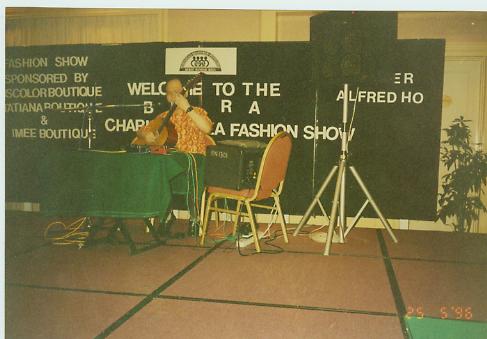
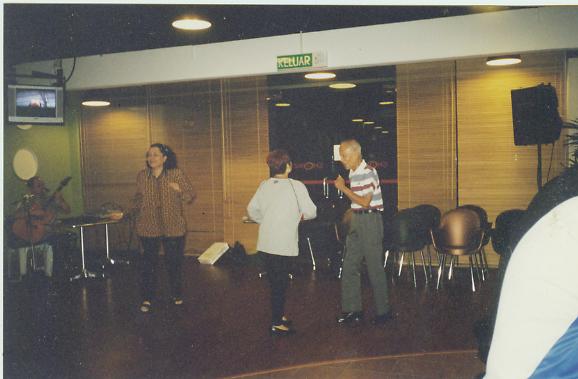
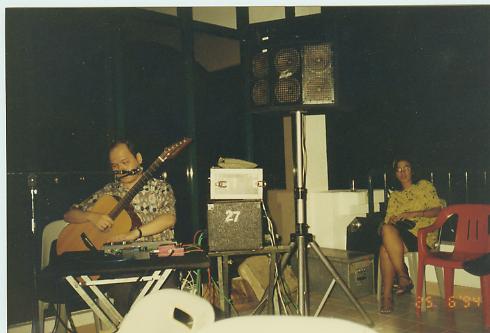
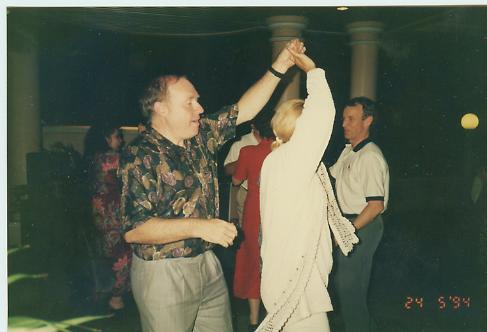
+-+house+christmas+party.jpg)
+-++house+christmas+party.jpg)
.jpg)
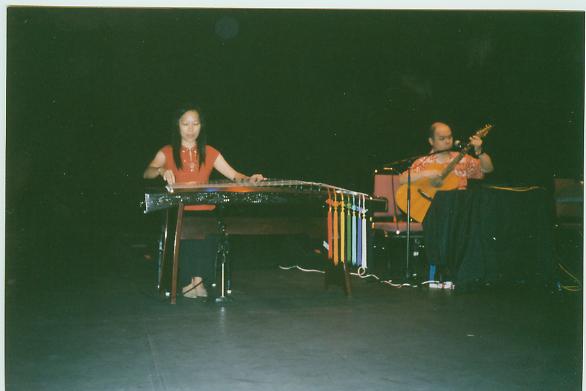
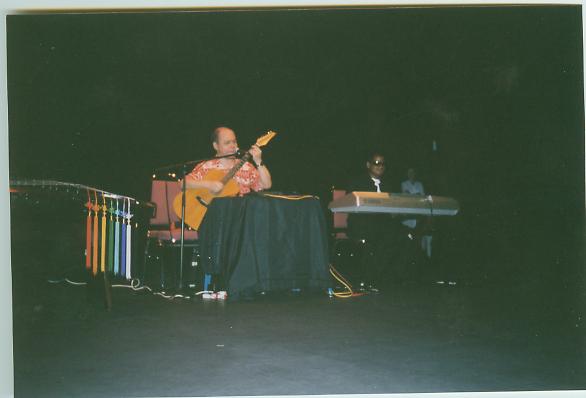
.jpg)
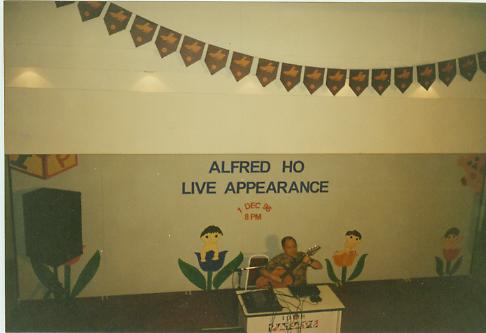
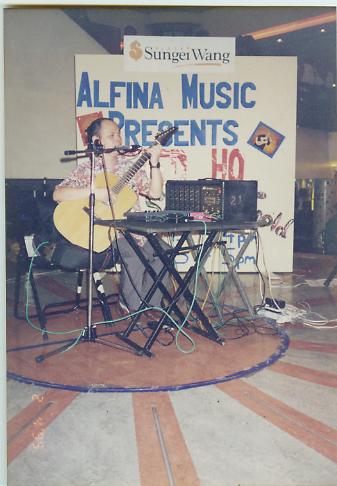
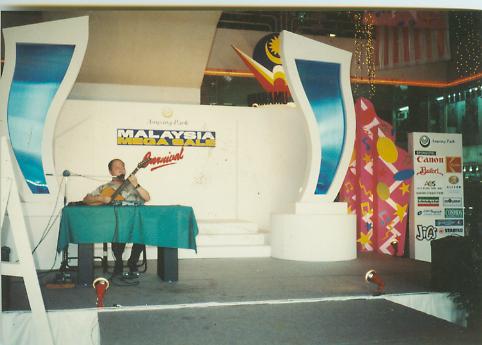
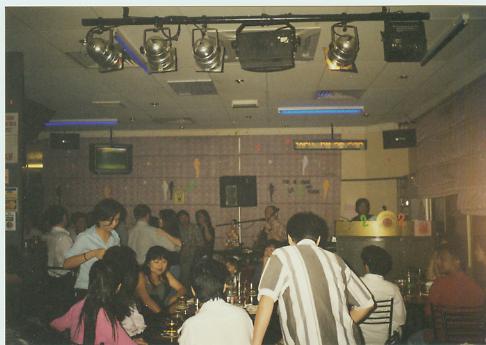
.jpg)
.jpg)
.jpg)
ALFRED HO GOES FULL-TIME
========================
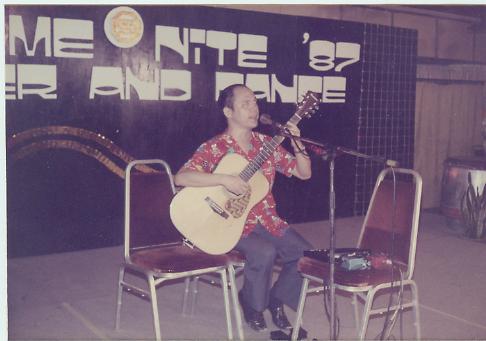
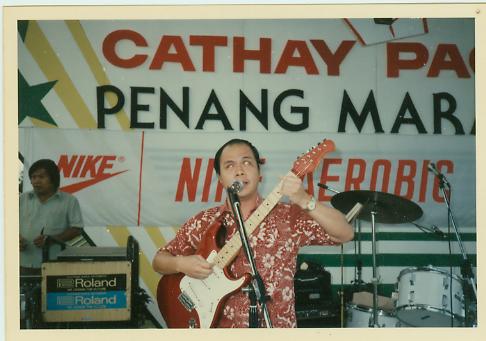
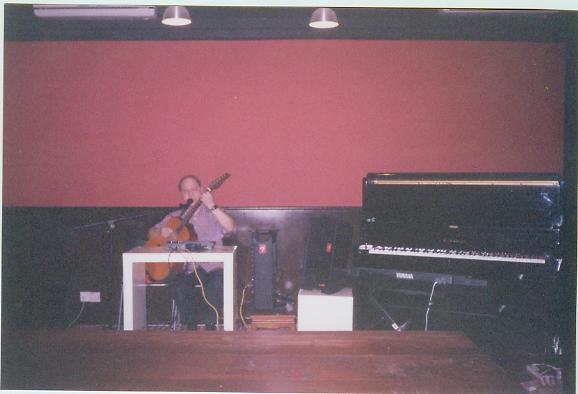
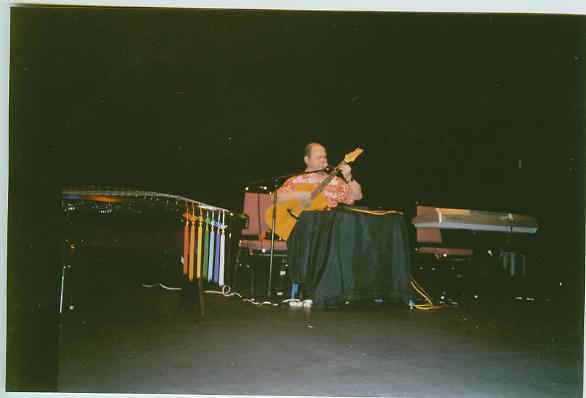
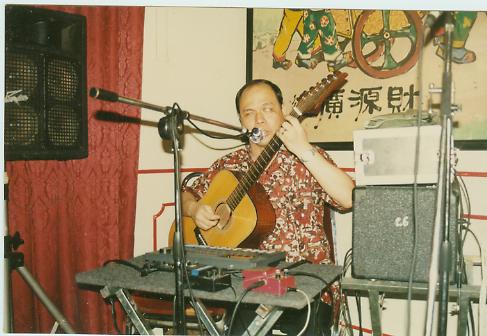
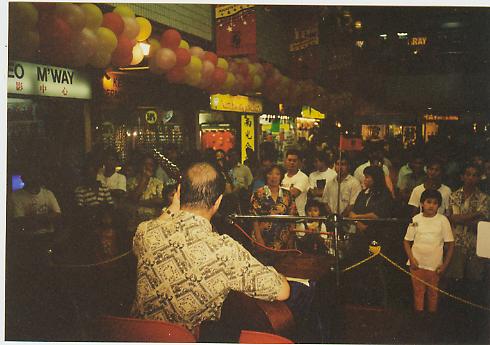
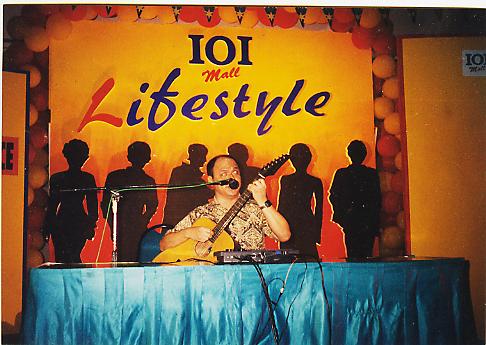
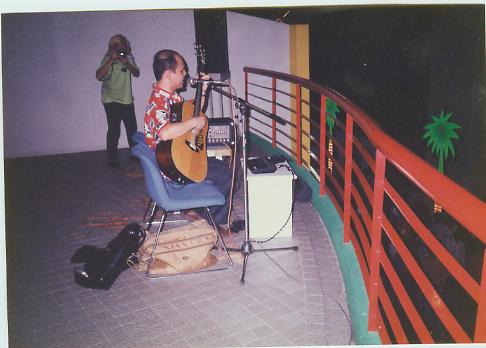
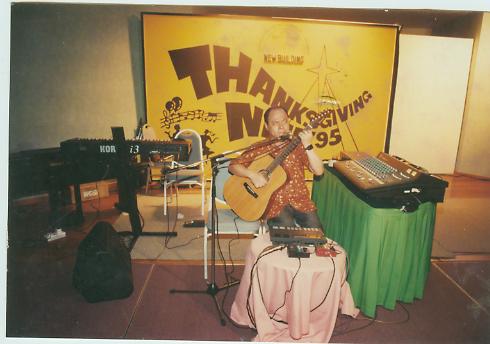
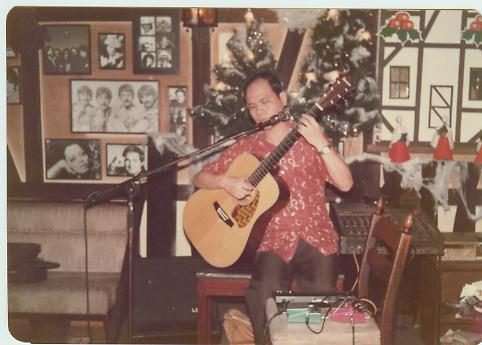
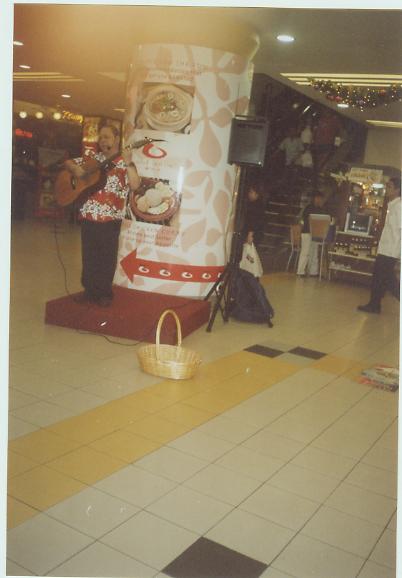
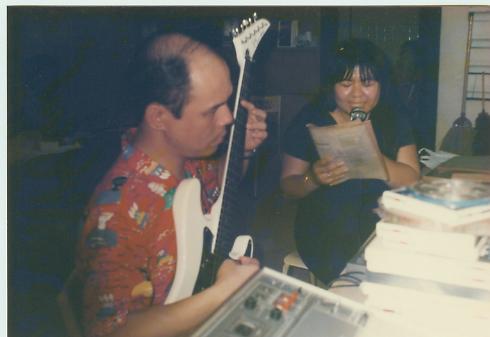
Alfred Ho is leading the way for the blind. Accompanying himself on the guitar, Alfred sings popular Cantonese numbers, theme songs from Hongkong, television serials and evergreen English hits.
Alfred left his job as a telephone operator with the Penang City Council to venture full-time into music. "I hope to pave the way for other blind people. I feel the blind should not be confined to jobs like basket-weaving, telephone operating or stenographing. I'm sure they can do other things. They should try other fields and exploit their talents. I may not succeed but I'm willing to try. Nothing ventured, nothing gained," he says.
Alfred took up music because life was boring. "After being trained at the Gurney Training Centre, I had to wait years for a job. In the meantime, I took up music, learning the guitar from a friend. I wrote songs and learnt country and western tunes," he says.
"I had been contemplating singing full-time for quite a while. I figured that if I wanted to do something, I must go all the way wholeheartedly. I was working in the day and singing at night. It was exhausting and I had little time to spare. Music is in my blood. It is a form of release. It is challenging and I get to meet lots of people. Since I have a talent, I might as well use it," he says.
Alfred learns his songs note by note from listening to tapes. He doesn't read music, although he knows Braille, which he learnt at the St Nicholas School for The Blind in Penang. "Music is more rewarding income-wise too. It is risky but any business venture is a risk. Like any artiste, I hope to make it big".
Alfred has a wide repertoire of songs. He sings in Cantonese, Mandarin, English and Malay. He is familiar with Rock and Roll, Disco, Sam Hui's and The Wynners canto-rock songs and Elvis Presley hits. He plays the guitar with very aggressive rhythmic strumming and plays lead in a very country manner. His singing is mellow and most times, he imitates the style and 'slang' of the original singers.
Showing posts with label Newspaper Articles. Show all posts
Showing posts with label Newspaper Articles. Show all posts

Oct 25, 2007
The Star - Teh Ewe Beng
ALFRED - HOPING FOR A COMEBACK
==============================
Remember Alfred Ho, the local crooner who burst into the pop scene with his own composition "TRAIN TO TENNESSEE" in the early 70's? For those unfamiliar with Alfred, he shares a common fate with renowned singers like Jose Feliciano, Stevie Wonder and Ray Charles. He's blind.
Now, Alfred has turned solo as a guitarist cum singer. Numbers like Gordon Lightfoot's "Sundown" and Elvis Presley's "Blue Suede Shoes" are his favourites. He lures the audience to sing along with him by talking to them. Yes, he talks and encourages them till they join him in the singing.
Alfred was blinded at three after he suffered an attack of measles. Living in a remote village in Perak, his parents were ignorant about the disease and did not take prompt action which resulted in his blindness. At six, he was admitted to the St. Nicholas School for the Blind in Penang, where the stayed until he passed his LCE in 1966. After that he was trained as a telephone operator and because of his handicap, it took him years to get a job.
It was during his jobless years that he took up singing in an attempt to break the boredom. "It was a frustrating period in my life and I just had to do something to occupy myself and pass the time," recalled Alfred. "My love for music grew and I wrote in to Rediffusion for an audition. It was successful and I took part in a few variety shows organised by them," he said.
Then came his Bakat TV appearance where he qualified for the semi-finals. Alfred also participated in a few TV musicals such as, "Bintang Baru" and once appeared on "Andre Goh's Show". The fact that he tries his best to please the audience in his special way makes him very popular. "
Being blind is not the end of the world. "In fact, we should try harder to discover our inner qualities," he said. When asked whether he has any difficulty in travelling, Alfred said that the problem arises only in unfamiliar surroundings.
==============================
Remember Alfred Ho, the local crooner who burst into the pop scene with his own composition "TRAIN TO TENNESSEE" in the early 70's? For those unfamiliar with Alfred, he shares a common fate with renowned singers like Jose Feliciano, Stevie Wonder and Ray Charles. He's blind.
Now, Alfred has turned solo as a guitarist cum singer. Numbers like Gordon Lightfoot's "Sundown" and Elvis Presley's "Blue Suede Shoes" are his favourites. He lures the audience to sing along with him by talking to them. Yes, he talks and encourages them till they join him in the singing.
Alfred was blinded at three after he suffered an attack of measles. Living in a remote village in Perak, his parents were ignorant about the disease and did not take prompt action which resulted in his blindness. At six, he was admitted to the St. Nicholas School for the Blind in Penang, where the stayed until he passed his LCE in 1966. After that he was trained as a telephone operator and because of his handicap, it took him years to get a job.
It was during his jobless years that he took up singing in an attempt to break the boredom. "It was a frustrating period in my life and I just had to do something to occupy myself and pass the time," recalled Alfred. "My love for music grew and I wrote in to Rediffusion for an audition. It was successful and I took part in a few variety shows organised by them," he said.
Then came his Bakat TV appearance where he qualified for the semi-finals. Alfred also participated in a few TV musicals such as, "Bintang Baru" and once appeared on "Andre Goh's Show". The fact that he tries his best to please the audience in his special way makes him very popular. "
Being blind is not the end of the world. "In fact, we should try harder to discover our inner qualities," he said. When asked whether he has any difficulty in travelling, Alfred said that the problem arises only in unfamiliar surroundings.
Oct 11, 2007
The Malay Mail - 9th Aug 1995
ALFRED HO ON STAGE
==================
The Actors Studio Theatre opens at Plaza Putra, Dataran Merdeka with a performance by singer Alfred Ho, who will be accompanied by The Gig Dancers.
Ho, who hails from Perak, has been crooning evergreens in the pub circuit for more than two decades. "I chose evergreens as my signature songs because they appeal to everyone. You'll find even the younger generation listening to oldies because not only are they soothing, they are meaningful as well," he says.
Ho, who became blind after an attack of measles at the age of three, has not let his handicap stand in the way of his aspirations. His passion for music goes back to his days at St. Nicholas School for the blind in Penang, where he learned to play the guitar. Unable to find a teacher to guide him, he decided to play the guitar on his own. He later formed a four-piece band called The Sharks which performed in pubs and at private functions.
After leaving the Gurney Training Centre where he received vocational training, he remained jobless for five years. Choosing not to sit back and depend on others, Ho kept himself busy working on songs which were later featured in his performances.
It was not easy for him to get a break. After years of struggle, he was finally auditioned by a local commercial broadcasting station which gave him the opportunity to do a show called Take Five. Those who heard Ho encouraged him to pursue a career in music.
Ho is thankful to friends and family who have given him support and encouragement which he describes as a boost to his singing career. The encouragement he received led him on to other achievements, among them, the chance to take part in the first series of the RTM singing contest in the early 70s, reaching the semi-finals.
It was also in the 1970s that Ho cut two EPs of his own compositions, including Train To Tennessee and Wendy's Love Song. After securing a full-time job with a local council, Ho continued singing part-time in pubs or entertaining at weddings and other functions. In 1984, he gave up his job as a telephone operator to go full swing into showbiz.
After many years in showbiz, Ho has no regrets. He says entertainment with all it's up and downs can be very fulfilling. Though going into business won't exactly be a breeze, he remains characteristically undeterred.
"I won't give up for as long as I have breath left in my body," he says.
==================
The Actors Studio Theatre opens at Plaza Putra, Dataran Merdeka with a performance by singer Alfred Ho, who will be accompanied by The Gig Dancers.
Ho, who hails from Perak, has been crooning evergreens in the pub circuit for more than two decades. "I chose evergreens as my signature songs because they appeal to everyone. You'll find even the younger generation listening to oldies because not only are they soothing, they are meaningful as well," he says.
Ho, who became blind after an attack of measles at the age of three, has not let his handicap stand in the way of his aspirations. His passion for music goes back to his days at St. Nicholas School for the blind in Penang, where he learned to play the guitar. Unable to find a teacher to guide him, he decided to play the guitar on his own. He later formed a four-piece band called The Sharks which performed in pubs and at private functions.
After leaving the Gurney Training Centre where he received vocational training, he remained jobless for five years. Choosing not to sit back and depend on others, Ho kept himself busy working on songs which were later featured in his performances.
It was not easy for him to get a break. After years of struggle, he was finally auditioned by a local commercial broadcasting station which gave him the opportunity to do a show called Take Five. Those who heard Ho encouraged him to pursue a career in music.
Ho is thankful to friends and family who have given him support and encouragement which he describes as a boost to his singing career. The encouragement he received led him on to other achievements, among them, the chance to take part in the first series of the RTM singing contest in the early 70s, reaching the semi-finals.
It was also in the 1970s that Ho cut two EPs of his own compositions, including Train To Tennessee and Wendy's Love Song. After securing a full-time job with a local council, Ho continued singing part-time in pubs or entertaining at weddings and other functions. In 1984, he gave up his job as a telephone operator to go full swing into showbiz.
After many years in showbiz, Ho has no regrets. He says entertainment with all it's up and downs can be very fulfilling. Though going into business won't exactly be a breeze, he remains characteristically undeterred.
"I won't give up for as long as I have breath left in my body," he says.
Oct 9, 2007
New Straits Times - Lim Kim Bee (26th Nov 1990)
HOW ALFRED HO GAUGES MOOD OF HIS AUDIENCE
=========================================
Blind musician Alfred Ho sees his audience with his mind's eye and the years of entertaining have enabled him to gauge their moods.
Blind since young, Alfred worked as a telephone operator in the Penang Municipal Council before quitting sometime in 1984 to sing full-time.
"When you can see the people's faces, it is much easier to gauge what they want. I have to listen for their applause or go by the night's requests to find out their response. Reading them with my ears isn't difficult really. When I don't hear the response I want, I would switch to other numbers until I hit the right ones."
Although this entertainer's favourites are oldies and country and western, he also sings Spanish, Thai, Vietnamese, Cantonese, Hokkien, Malay and contemporary numbers.
Alfred who likes P. Ramlee's songs and also yodels when he does country and western numbers, says he quit his job for showbiz because of the challenged involved.
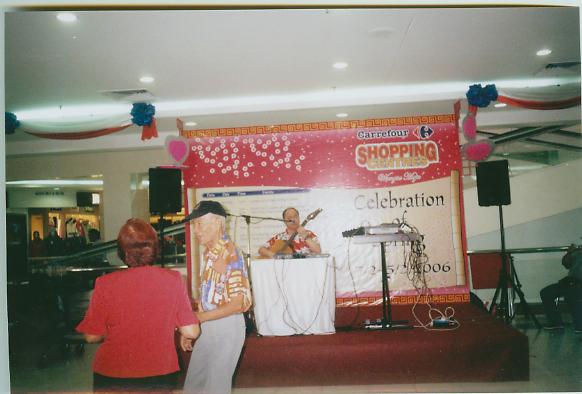
Since going professional, Alfred has done stints in pubs, at functions and department stores in Kuala Lumpur and also performed at a leading hotel in Kuala Terengganu.
His most memorable moments in Ipoh have been the shows he did at the Royal Ipoh Club which he said was made possible by the late journalist John Kam, who helped arrange for his performance.
He also credited Royston Goh and Patrick Teoh as being responsible for starting him off on his singing career.
=========================================
Blind musician Alfred Ho sees his audience with his mind's eye and the years of entertaining have enabled him to gauge their moods.
Blind since young, Alfred worked as a telephone operator in the Penang Municipal Council before quitting sometime in 1984 to sing full-time.
"When you can see the people's faces, it is much easier to gauge what they want. I have to listen for their applause or go by the night's requests to find out their response. Reading them with my ears isn't difficult really. When I don't hear the response I want, I would switch to other numbers until I hit the right ones."
Although this entertainer's favourites are oldies and country and western, he also sings Spanish, Thai, Vietnamese, Cantonese, Hokkien, Malay and contemporary numbers.
Alfred who likes P. Ramlee's songs and also yodels when he does country and western numbers, says he quit his job for showbiz because of the challenged involved.
Since going professional, Alfred has done stints in pubs, at functions and department stores in Kuala Lumpur and also performed at a leading hotel in Kuala Terengganu.
His most memorable moments in Ipoh have been the shows he did at the Royal Ipoh Club which he said was made possible by the late journalist John Kam, who helped arrange for his performance.
He also credited Royston Goh and Patrick Teoh as being responsible for starting him off on his singing career.
Sep 25, 2007
The New Sunday Times - Sunday People (17th Oct 2004)
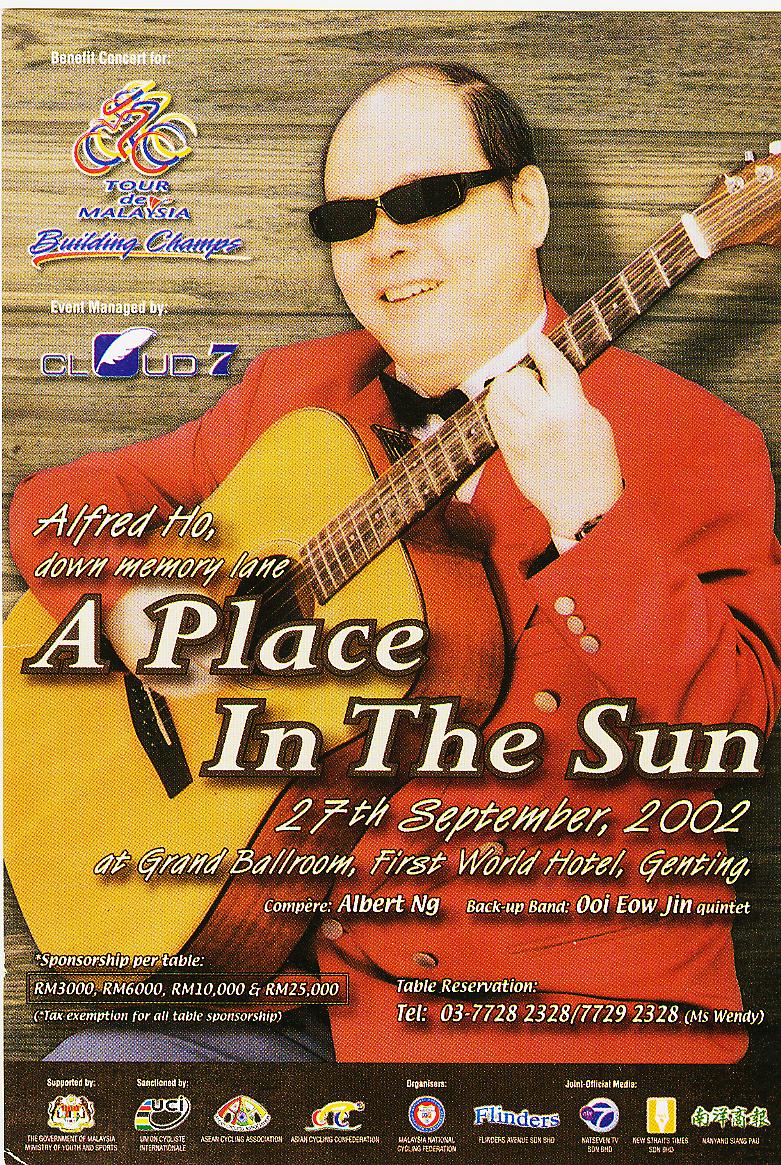
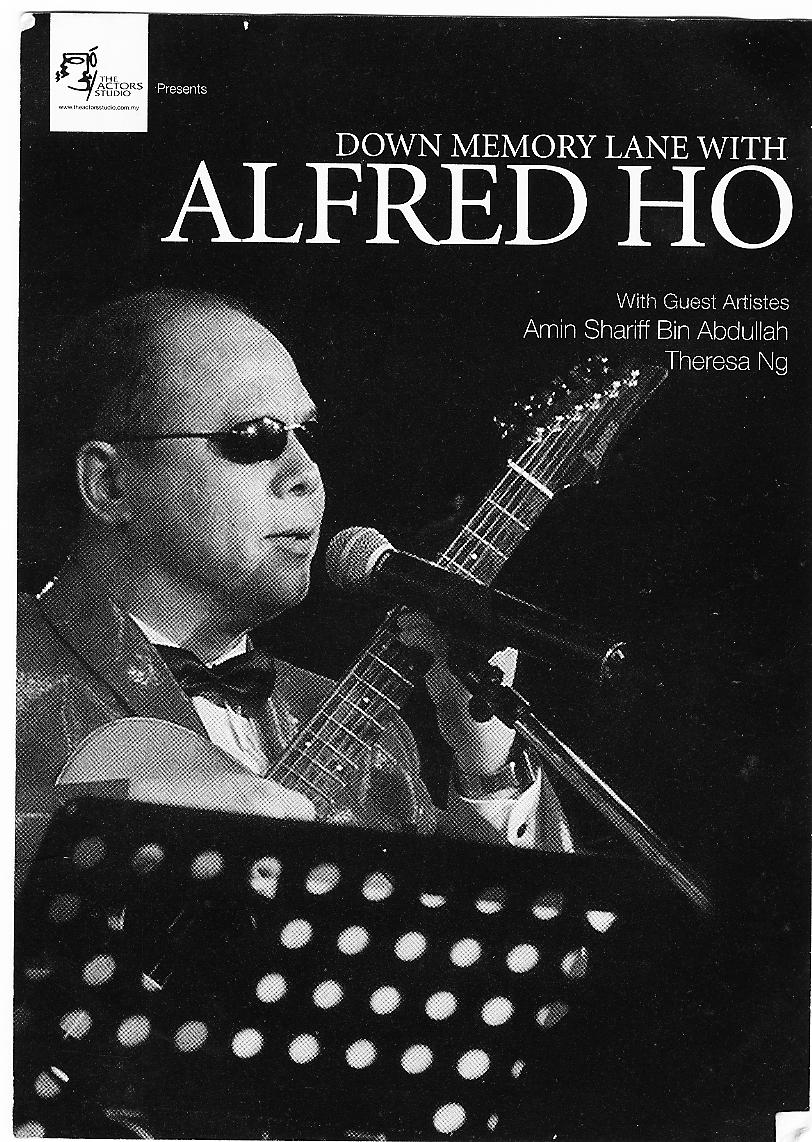
DOWN MEMORY LANE WITH ALFRED HO
================================
Perseverance and a love for perennial pop favourites drive Alfred Ho to sing. Although he has had to face more odds and obstacles than the average person, he relishes painting new mental pictures of the songs he sings over and over again.
By anyone's count, Ho is a veteran in the music circuit. He carved a name for himself in the 70's, singing the popular standards as well as his own compositions. He became a star of sorts when he entered Bakat TV, s popular talent contest organised by RTM. He didn't do too badly. He reached the semi-finals, a journey which led to other opportunities on radio and TV. Even today, he gets recognised in the streets.
Everything has changed since then. Contemporary hit songs are heavily saddled with bass beats, rap rhymes and crunching guitar sounds. In that realm of cacophony, Ho believes there's still a strong following for the pop evergreens. His repertoire spans everyone from Ray Charles, Johnny Horton, Elvis Presley to Cliff Richard.
"There are a lot of evergreen songs that I would love to share because they always sound good and bring happy feelings," enthuses Ho. "I enjoy the element of spontaneity because the audience tends to loosen up. By performing song requests, I expect that they will enjoy a slice of golden nostalgia."
After all these years, Ho sounds like someone whose faith in hope and joy is renewed each time he sings. In his heyday, he was often referred to as the "Jose Feliciano of Malaysia," a very flattering nickname considering that Feliciano is a six-time Grammy Award winning singer, guitarist and composer who was born blind.
Ho may not have a Grammy on his mantle shelf but like Feliciano he is blind, caused by a measles attack when he was three. Nothing, however, deterred this strong-willed man from trying to achieve his dream.
One fine day, Ho hopes to perform in Las Vegas. It may sound like an unattainable dream, but nothing seems impossible for Ho who used to attach rubber bands to a biscuit tin and then strummed it like a guitar. With help from a schoolmate, he learned a few basic chords and taught himself to play. By the time he reached adulthood, he had polished up his guitar-playing skills and even composed a few songs.
He did not have any formal musical training or family support but Ho was always confident and wanted a chance to prove himself. His lucky break came when he asked a local radio station for an audition to play music on a show. They asked him to appear on a show called TAKE FIVE alongside some radio personalities, one of whom was Patrick Teoh. With encouragement from friends, he entered Bakat TV and the rest of the story...well, the story has many more chapters to go.
Unfortunately, such opportunities have been few and far between. Ho feels there is a lot of discrimination towards disabled performers based on his many experiences where people have expressed interest in his work only to withdraw when they learned that he is blind. He is also saddened by the lack of support from blind associations and other organisations.
But these are minor setbacks as Ho is an optimist. Today, he brims with enthusiasm for just the chance to share his songs with an audience. All the better if they sing along with him.
================================
Perseverance and a love for perennial pop favourites drive Alfred Ho to sing. Although he has had to face more odds and obstacles than the average person, he relishes painting new mental pictures of the songs he sings over and over again.
By anyone's count, Ho is a veteran in the music circuit. He carved a name for himself in the 70's, singing the popular standards as well as his own compositions. He became a star of sorts when he entered Bakat TV, s popular talent contest organised by RTM. He didn't do too badly. He reached the semi-finals, a journey which led to other opportunities on radio and TV. Even today, he gets recognised in the streets.
Everything has changed since then. Contemporary hit songs are heavily saddled with bass beats, rap rhymes and crunching guitar sounds. In that realm of cacophony, Ho believes there's still a strong following for the pop evergreens. His repertoire spans everyone from Ray Charles, Johnny Horton, Elvis Presley to Cliff Richard.
"There are a lot of evergreen songs that I would love to share because they always sound good and bring happy feelings," enthuses Ho. "I enjoy the element of spontaneity because the audience tends to loosen up. By performing song requests, I expect that they will enjoy a slice of golden nostalgia."
After all these years, Ho sounds like someone whose faith in hope and joy is renewed each time he sings. In his heyday, he was often referred to as the "Jose Feliciano of Malaysia," a very flattering nickname considering that Feliciano is a six-time Grammy Award winning singer, guitarist and composer who was born blind.
Ho may not have a Grammy on his mantle shelf but like Feliciano he is blind, caused by a measles attack when he was three. Nothing, however, deterred this strong-willed man from trying to achieve his dream.
One fine day, Ho hopes to perform in Las Vegas. It may sound like an unattainable dream, but nothing seems impossible for Ho who used to attach rubber bands to a biscuit tin and then strummed it like a guitar. With help from a schoolmate, he learned a few basic chords and taught himself to play. By the time he reached adulthood, he had polished up his guitar-playing skills and even composed a few songs.
He did not have any formal musical training or family support but Ho was always confident and wanted a chance to prove himself. His lucky break came when he asked a local radio station for an audition to play music on a show. They asked him to appear on a show called TAKE FIVE alongside some radio personalities, one of whom was Patrick Teoh. With encouragement from friends, he entered Bakat TV and the rest of the story...well, the story has many more chapters to go.
Unfortunately, such opportunities have been few and far between. Ho feels there is a lot of discrimination towards disabled performers based on his many experiences where people have expressed interest in his work only to withdraw when they learned that he is blind. He is also saddened by the lack of support from blind associations and other organisations.
But these are minor setbacks as Ho is an optimist. Today, he brims with enthusiasm for just the chance to share his songs with an audience. All the better if they sing along with him.
Sep 23, 2007
The Star - Allan Koay (Feb 2001)
UPHILL ALL THE WAY FOR HO
========================
Alfred Ho is in dire straits, or so he laments. "I can get by with at least one show a month," says Ho. "But now, I don't even get one show a month..and I have to live on my savings."
Even so, Ho isn't one to rest on his laurels and await handouts. He has recorded a new album which he hopes will help ease his financial woes.
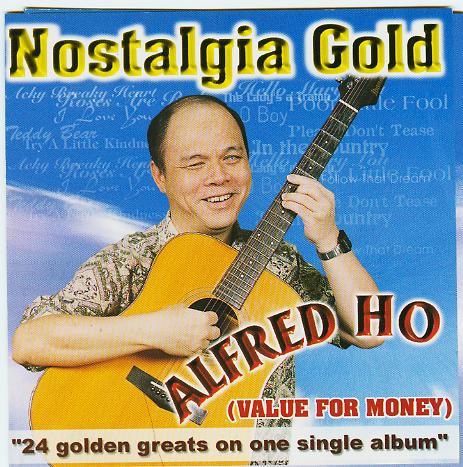
NOSTALGIA GOLD, Ho's latest album of 24 songs, continues in almost the same vein as his previous albums. Almost, because this time around, it's not only rare old songs, but also some common or better-known hits from the 1980's and early 1990's.
"Those who buy my Cd's know that my concept is always old favourites," says Ho. But this time around, he decided to make the album more accessible by including songs that people can easily recognise and enjoy.
NOSTALGIA GOLD includes songs like the two-stepping ACKY BREAKY HEART, the Eagles' TEQUILA SUNRISE, ROSES ARE RED, BLUE SUEDE SHOES, HEY GOOD LOOKING and Nilson's EVERY BODY'S TALKING.
"It's a good selection of songs that will probably reach across the board to please many listeners." And from the sound of the recording, it is clear that the production has been handled professionally, which is one of Ho's self-imposed requirements.
"When we do an album, we have to conform to the normal standards," says Ho. "It's better to have a good backing band. During a show, it's okay for me to play the guitar alone to a rhythm machine. But on an album, because people will keep it for a life-time, it has to be as good as possible. Only if I were as well known as, say Paul McCartney, then I can do an unplugged album. But I'm not, so I don't want to take the risk. I'm financing this album myself."
However, the album faces an uncertain future, since there is practically no advertising or backing from any recording company. It would obviously be difficult to sell the album without any form of marketing.
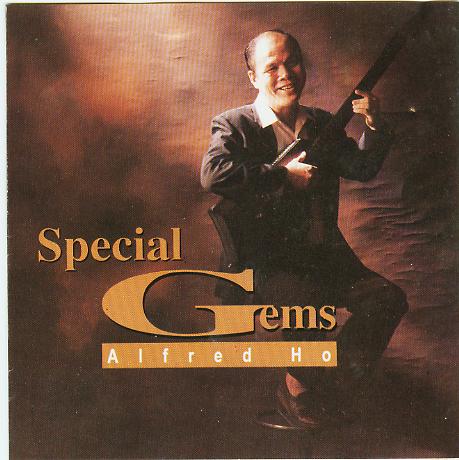
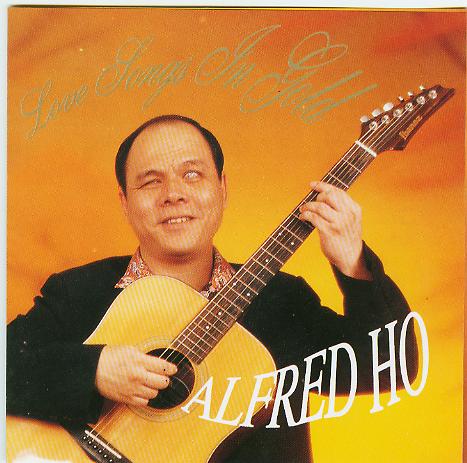
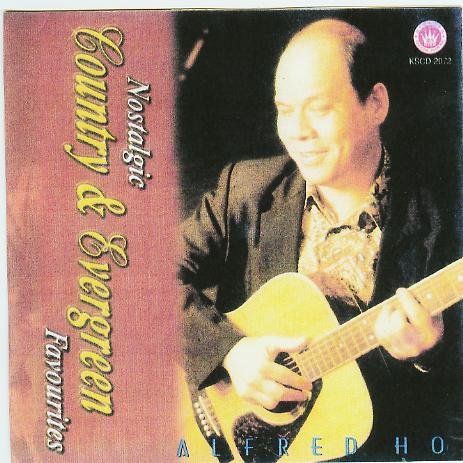
NOSTALGIA GOLD is Ho's fourth album, the other three being, SPECIAL GEMS, LOVE SONGS IN GOLD and NOSTALGIC COUNTRY AND EVERGREEN FAVOURITES. The singer-guitarist has always produced his own albums, but one thing he has yet to do is include some of his own compositions, although he did release two EP Vinyls of originals earlier in his career.
"I still feel it's not the time for me to put my own songs into my albums," explains Ho. "I'm not a household name yet, so I don't know how much people are willing to accept that. So far, I still don't have the confidence."
These days, he says, his songs hardly get airplay on radio stations. Asked if it's because today's music caters more for youngsters who may not take to old songs that enthusiastically, Ho says it's not necessarily so.
"I know because when I play an old song in the shopping complexes, they will ask my wife if it's a new song, because they like it," says the Perak born singer. "My songs are more for those in their 30's, 40's and 50's. But then, I don't see why youngsters can't also enjoy my music. This time around, I've included some new songs, so I've not forgotten them." But he cautions : "Of course you can improve on these old songs, but I don't think you need to change them so drastically. Recording techniques in the old days weren't as good as the new ones. And you will have to improve on that. But I don't think you have to change it 100%."
Ho became blind at the age of three after a bout of measles. He studied at the St Nicholas School for the Blind in Penang. There he developed a love for music and learnt how to play the guitar by himself. His talent came to public prominence after performing on a show called TAKE FIVE on Rediffusion in 1971. In 1983, he made a hard decision to quit his 10-year old job as a telephone operator to become a full-time entertainer. Since then, his career has been a uphill battle against a difficult music industry and unscrupulous characters but through it all, Ho never relinquished his dreams.
He believes that opportunity should be given to handicapped individuals for their talents to flourish and that they should not all be forced to become basket-weavers or telephone operators.
"People think that because I have made albums, I'm doing very well," says Ho. "But it is not so. Many people do not realise this."
========================
Alfred Ho is in dire straits, or so he laments. "I can get by with at least one show a month," says Ho. "But now, I don't even get one show a month..and I have to live on my savings."
Even so, Ho isn't one to rest on his laurels and await handouts. He has recorded a new album which he hopes will help ease his financial woes.
NOSTALGIA GOLD, Ho's latest album of 24 songs, continues in almost the same vein as his previous albums. Almost, because this time around, it's not only rare old songs, but also some common or better-known hits from the 1980's and early 1990's.
"Those who buy my Cd's know that my concept is always old favourites," says Ho. But this time around, he decided to make the album more accessible by including songs that people can easily recognise and enjoy.
NOSTALGIA GOLD includes songs like the two-stepping ACKY BREAKY HEART, the Eagles' TEQUILA SUNRISE, ROSES ARE RED, BLUE SUEDE SHOES, HEY GOOD LOOKING and Nilson's EVERY BODY'S TALKING.
"It's a good selection of songs that will probably reach across the board to please many listeners." And from the sound of the recording, it is clear that the production has been handled professionally, which is one of Ho's self-imposed requirements.
"When we do an album, we have to conform to the normal standards," says Ho. "It's better to have a good backing band. During a show, it's okay for me to play the guitar alone to a rhythm machine. But on an album, because people will keep it for a life-time, it has to be as good as possible. Only if I were as well known as, say Paul McCartney, then I can do an unplugged album. But I'm not, so I don't want to take the risk. I'm financing this album myself."
However, the album faces an uncertain future, since there is practically no advertising or backing from any recording company. It would obviously be difficult to sell the album without any form of marketing.
NOSTALGIA GOLD is Ho's fourth album, the other three being, SPECIAL GEMS, LOVE SONGS IN GOLD and NOSTALGIC COUNTRY AND EVERGREEN FAVOURITES. The singer-guitarist has always produced his own albums, but one thing he has yet to do is include some of his own compositions, although he did release two EP Vinyls of originals earlier in his career.
"I still feel it's not the time for me to put my own songs into my albums," explains Ho. "I'm not a household name yet, so I don't know how much people are willing to accept that. So far, I still don't have the confidence."
These days, he says, his songs hardly get airplay on radio stations. Asked if it's because today's music caters more for youngsters who may not take to old songs that enthusiastically, Ho says it's not necessarily so.
"I know because when I play an old song in the shopping complexes, they will ask my wife if it's a new song, because they like it," says the Perak born singer. "My songs are more for those in their 30's, 40's and 50's. But then, I don't see why youngsters can't also enjoy my music. This time around, I've included some new songs, so I've not forgotten them." But he cautions : "Of course you can improve on these old songs, but I don't think you need to change them so drastically. Recording techniques in the old days weren't as good as the new ones. And you will have to improve on that. But I don't think you have to change it 100%."
Ho became blind at the age of three after a bout of measles. He studied at the St Nicholas School for the Blind in Penang. There he developed a love for music and learnt how to play the guitar by himself. His talent came to public prominence after performing on a show called TAKE FIVE on Rediffusion in 1971. In 1983, he made a hard decision to quit his 10-year old job as a telephone operator to become a full-time entertainer. Since then, his career has been a uphill battle against a difficult music industry and unscrupulous characters but through it all, Ho never relinquished his dreams.
He believes that opportunity should be given to handicapped individuals for their talents to flourish and that they should not all be forced to become basket-weavers or telephone operators.
"People think that because I have made albums, I'm doing very well," says Ho. "But it is not so. Many people do not realise this."
Sep 19, 2007
The Star - Allan Koay (March 2004)
GIVE DISABLED MUSICIANS A CHANCE
===============================
It is tough these days for sighted musicians, what more for the disabled ones. For blind singer-guitarist Alfred Ho, jobs are hard to come by.
Although he has four albums under his belt, Ho says he has not been able to find work for the past four months. "My wife has called up shopping complexes to ask if they would have me play my music at their premises, but when they heard that it was a blind person, they turned me down. They should as least give me a chance to prove myself. It they don't like what they hear, they can always turn me away."
Ho feels the government should be helpful to the disabled.
"What the government can do, is contact the various organisations for the disabled and ask for musicians to perform at government functions and on television," says Ho. "Rather than give them welfare aid, why not give them gainful employment? A lot has been said about employing the disabled, but nothing much has been done really. If the disabled are given jobs, they can be useful to the community and contribute to the nation too."
"I am not asking for donations. I am willing to work for the money," Ho stresses.
In 1983, Ho made the tough decision of quitting his job as a telephone operator to become a full-time musician. He had his own show on Radio 4 for a while but it was discontinued in July 2000 when a fire broke out at RTM's premises.
Ho says he has tried his hand at other jobs but that did not work out. He tried massaging for a while but due to rheumatism, he ended up with painful hands. He is thinking of setting up a small place to play his music but that again requires money.
Ho feels the government should set an example by hiring disabled musicians itself. Instead of getting disabled musicians to perform only at special occasions, the government should look into hiring them more regularly. "Auditions can be held for the musicians to see if they meet the standards," says Ho.
"If they don't and are rejected, then it is understandable. But they should be given a chance. If the government shows that it is serious about helping the disabled, then the disabled will be motivated to work hard. Right now, there is no incentive for them at all. In fact, a lot of disabled musicians may be feeling discouraged."
"There may be a lot of talented disabled musicians out there but who will hire them? It is still up to the government to make a difference."
===============================
It is tough these days for sighted musicians, what more for the disabled ones. For blind singer-guitarist Alfred Ho, jobs are hard to come by.
Although he has four albums under his belt, Ho says he has not been able to find work for the past four months. "My wife has called up shopping complexes to ask if they would have me play my music at their premises, but when they heard that it was a blind person, they turned me down. They should as least give me a chance to prove myself. It they don't like what they hear, they can always turn me away."
Ho feels the government should be helpful to the disabled.
"What the government can do, is contact the various organisations for the disabled and ask for musicians to perform at government functions and on television," says Ho. "Rather than give them welfare aid, why not give them gainful employment? A lot has been said about employing the disabled, but nothing much has been done really. If the disabled are given jobs, they can be useful to the community and contribute to the nation too."
"I am not asking for donations. I am willing to work for the money," Ho stresses.
In 1983, Ho made the tough decision of quitting his job as a telephone operator to become a full-time musician. He had his own show on Radio 4 for a while but it was discontinued in July 2000 when a fire broke out at RTM's premises.
Ho says he has tried his hand at other jobs but that did not work out. He tried massaging for a while but due to rheumatism, he ended up with painful hands. He is thinking of setting up a small place to play his music but that again requires money.
Ho feels the government should set an example by hiring disabled musicians itself. Instead of getting disabled musicians to perform only at special occasions, the government should look into hiring them more regularly. "Auditions can be held for the musicians to see if they meet the standards," says Ho.
"If they don't and are rejected, then it is understandable. But they should be given a chance. If the government shows that it is serious about helping the disabled, then the disabled will be motivated to work hard. Right now, there is no incentive for them at all. In fact, a lot of disabled musicians may be feeling discouraged."
"There may be a lot of talented disabled musicians out there but who will hire them? It is still up to the government to make a difference."
Sep 18, 2007
The New Straits Times - Anne Lourdes (15th Sept 2007)
THE RIGHT APPROACH
===================
Singer Alfred Ho has never let his handicap get between him and his desire to sing. The man has experienced hard times but he has taken them in his stride and emerged a stronger person.
And if anything, his third album NOSTALGIC COUNTRY AND EVERGREEN FAVOURITES, is proof that determination and the right attitude do carry a person far. The singer recalls, "It was difficult for me and life became bitter because when I approached some recording companies, they did not respond favourably to my request."
The trips to the numerous record shops he made were humiliating, he says, because it showed people didn't take him seriously. Finally, he came out with his own money to finance the project. The 47-year-old Ho, who has been singing for more than 2 decades, has put together in one package, some great golden oldies because " I want people to know me better and since the younger generation hardly get to hear these songs, I thought of doing it for their benefit." The album features 16 country and evergreen songs namely, TALE OF MARIE, MUSIC TO WATCH GIRLS BY, SIXTEEN CUBES OF SUGAR, GREAT BIG WORLD and TEN THOUSAND MILES.
Ho received a lot of encouraging words from his fans when his first and second albums were released. But a lot of his fans told him that they prefer his "LIVE" performances. Though best known for his country music, some people label him THE MALAYSIAN STEVIE WONDER, a tag he takes as a compliment.
===================
Singer Alfred Ho has never let his handicap get between him and his desire to sing. The man has experienced hard times but he has taken them in his stride and emerged a stronger person.
And if anything, his third album NOSTALGIC COUNTRY AND EVERGREEN FAVOURITES, is proof that determination and the right attitude do carry a person far. The singer recalls, "It was difficult for me and life became bitter because when I approached some recording companies, they did not respond favourably to my request."
The trips to the numerous record shops he made were humiliating, he says, because it showed people didn't take him seriously. Finally, he came out with his own money to finance the project. The 47-year-old Ho, who has been singing for more than 2 decades, has put together in one package, some great golden oldies because " I want people to know me better and since the younger generation hardly get to hear these songs, I thought of doing it for their benefit." The album features 16 country and evergreen songs namely, TALE OF MARIE, MUSIC TO WATCH GIRLS BY, SIXTEEN CUBES OF SUGAR, GREAT BIG WORLD and TEN THOUSAND MILES.
Ho received a lot of encouraging words from his fans when his first and second albums were released. But a lot of his fans told him that they prefer his "LIVE" performances. Though best known for his country music, some people label him THE MALAYSIAN STEVIE WONDER, a tag he takes as a compliment.
Sep 10, 2007
The Sunday Mail - Ricky Yap (15th Sept 1996)
TIMELESS AND TALENTED
=====================
Blind singer Alfred Ho may be a household name to many but he may be one of only a few success stories among the visually-impaired in Malaysia.
Ho has garnered a reputation as a pub singer, doing the Malaysian nightspot circuit but his gigs are few and far between, secured by word of mouth.
Anyhow, he does not comply with the basket-weaving or telephone-operating jobs normally associated with his lot. Ho has also stepped out of the realm of his peers found busking near the Puduraya bus terminal or outside department stores in Kuala Lumpur.
But Ho who is self-supported is not a happy man. He feels the government and the private sector should do more to improve the welfare of the blind, especially singers and musicians.
"I am appealing to the Ministry of Information and the private sector to charge a minimal fee, if not free, for advertising our musical works," said Ho.
He was speaking at a Press conference to promote his third english album "NOSTALGIC COUNTRY & EVERGREEN FAVOURITES. "When I first found out how expensive radio advertising rates were, I got the shock of my life. I simply couldn't afford them."
Despite his impairment, the 47 year old Ho still has a keen insight into the vital role advertising plays. "Strong advertising is a very important strategy in determining sales," said Ho, who is speaking from experience where his previous two english efforts, "SPECIAL GEMS" and "LOVE SONGS IN GOLD" managed to "break even" despite an absence of advertising.
"The 16 songs in NOSTALGIC COUNTRY & EVERGREEN FAVOURITES are my personal selections. The songs are rare and cannot be found in the market but as the title suggests, are timeless," said Ho, rattling off titles such as LITTLE DUTCH GIRL, VENUS IN BLUE JEANS, SWEET GYPSY ROSE, WITCH DOCTOR, THAT'S ALL SHE WROTE and I DON'T CARE IF TOMORROW NEVER COMES.
And opportunities are non-existent, Ho lamented, in the advertising jingles market. "It's a closed market which is monopolised by the same set of players. I tried to break into it a few times but was given the brush-off," said Ho, who became blind at the age of three after a bout of measles.
With music in his blood (I used to make music by pulling rubber bands on a tin drum), Ho started playing the guitar on his own at the age of eight after becoming inspired by a schoolmate's expertise on the instrument. Ho later became a guitar maestro and decided to test his singing and musical skills in the BAKAT TV contest in 1971, where he managed to reach the semi-finals.
"I sang my own compositions TRAIN TO TENNESSEE and WENDY'S LOVE SONG in that talentime contest and the two songs were later released as EPs," reminisced Ho, who later gave up his job as a telephone operator to become a full-time singer. He does not reject his decision but still finds his road to stardom littered by pitfalls and potholes.
=====================
Blind singer Alfred Ho may be a household name to many but he may be one of only a few success stories among the visually-impaired in Malaysia.
Ho has garnered a reputation as a pub singer, doing the Malaysian nightspot circuit but his gigs are few and far between, secured by word of mouth.
Anyhow, he does not comply with the basket-weaving or telephone-operating jobs normally associated with his lot. Ho has also stepped out of the realm of his peers found busking near the Puduraya bus terminal or outside department stores in Kuala Lumpur.
But Ho who is self-supported is not a happy man. He feels the government and the private sector should do more to improve the welfare of the blind, especially singers and musicians.
"I am appealing to the Ministry of Information and the private sector to charge a minimal fee, if not free, for advertising our musical works," said Ho.
He was speaking at a Press conference to promote his third english album "NOSTALGIC COUNTRY & EVERGREEN FAVOURITES. "When I first found out how expensive radio advertising rates were, I got the shock of my life. I simply couldn't afford them."
Despite his impairment, the 47 year old Ho still has a keen insight into the vital role advertising plays. "Strong advertising is a very important strategy in determining sales," said Ho, who is speaking from experience where his previous two english efforts, "SPECIAL GEMS" and "LOVE SONGS IN GOLD" managed to "break even" despite an absence of advertising.
"The 16 songs in NOSTALGIC COUNTRY & EVERGREEN FAVOURITES are my personal selections. The songs are rare and cannot be found in the market but as the title suggests, are timeless," said Ho, rattling off titles such as LITTLE DUTCH GIRL, VENUS IN BLUE JEANS, SWEET GYPSY ROSE, WITCH DOCTOR, THAT'S ALL SHE WROTE and I DON'T CARE IF TOMORROW NEVER COMES.
And opportunities are non-existent, Ho lamented, in the advertising jingles market. "It's a closed market which is monopolised by the same set of players. I tried to break into it a few times but was given the brush-off," said Ho, who became blind at the age of three after a bout of measles.
With music in his blood (I used to make music by pulling rubber bands on a tin drum), Ho started playing the guitar on his own at the age of eight after becoming inspired by a schoolmate's expertise on the instrument. Ho later became a guitar maestro and decided to test his singing and musical skills in the BAKAT TV contest in 1971, where he managed to reach the semi-finals.
"I sang my own compositions TRAIN TO TENNESSEE and WENDY'S LOVE SONG in that talentime contest and the two songs were later released as EPs," reminisced Ho, who later gave up his job as a telephone operator to become a full-time singer. He does not reject his decision but still finds his road to stardom littered by pitfalls and potholes.
Sep 8, 2007
The Borneo Post (Sabah) - Leonard Alaza (Oct 9th 2005)
RE : ALL BLIND SINGER, ALFRED ASKS FOR IS ANOTHER CHANCE
=====================================================
At the age of three, Perak born Alfred Ho suffered from a bout of measles that led him to go blind for the rest of his life. It was a very cruel blow to such a young life but he moved on, journeying in total darkness armed with nothing but the light of sheer determination and hope. After completeing his primary education in a school for the blind, he enrolled for vocational training in Kuala Lumpur and was trained as a telephone operator. Armed with skills, he entered the job market and managed to get a job as a telephone operator in Penang. His income, although small, was sufficient to get him through to the next pay day. And the next...and the next...and the next for the next ten years. Secure? Yes. Satisfied? Absolutely not. Although conditioned by blindness, Alfred, like most people, had big dreams. His passion was and still is, singing. And like all ambitious individuals, he wanted to live his dreams, even earning his bread and butter doing the thing closest to his heart.
His journey started rather cautiously though, singing in public events part time while keeping his job. He even took part in the "Bakat TV" in the 70's (later known as Bintang RTM) and sang his way into the semi-finals. But the thought of diving into it on a full-time basis did not come until the mid-80's. "I came to a point in my life that I decided to follow my dreams seriously. So I left my job and came to KL" he recalled during an interview with THE BORNEO POST prior to his charity concert here in Kota Kinabalu last week. That was when reality struck. He realised soon enough that the mainstream entertainment industry had no place for people like him. It was fine for them that he sang in charity shows or organized public events but not on a professional basis. He did actually manage to get a radio deejay job after much persistence but claimed that his employers were actually not sincere in hiring him. Eventually, he lost the job after "they made my life difficult" but later won a court battle against them. Already sentenced to a life of blindness, Alfred found himself groping in the dark for a singing break that would place him somewhere in the competetive industry. But he has yet to make it anywhere until today, about 20 years after he first turned a full time singer. "My experience is all about facing one rejection after another. The discrimination against people like me is very bad I tell you" lamented the 56-year old who plays the guitar as he sings. He even had to produce all his four "albums" by himself, as no recording label showed any interest in him. The "albums" contained not songs that he produced himself but those rarely played on the radio and sold whenever he was hired to do a public performance. The fees he gets from inconsistent stage performances - mostly charity dinners, have never been enough to see him through in a month. Many times he went through months without a singing job. During those times, he was forced to search for options, anything to pay the bills. "I applied for (ordinary) jobs but even then I was turned down. It was frustrating." On various occasions, out of desperation, he dared himself to approach political leaders for help but ended getting even more frustrated, even angry. "I came to one political party's office but the person in-charge arrogantly told me to go back to my (blind) association for help as he could not assist me....The society always say that they care for people like me. From my experience, I find that it is not true. If they were sincere, I would have already been given the chance to earn a living from my talents," he said. He did a earn a living from his talents alright... on the streets like other blind musicians. "I did it a couple of times, not because I wanted to but because I had no other choice. But if I could, then I would not have done it because I would only be degrading myself. People would say, "why would we pay so much to see you perform on stage, having paid far less to you when you were in the streets." "I don't mean to look down on other blind musicians who are earning their living as street performers. I just place a certain standard on myself and I always believe I deserve a better treatment. Not just me but all those people like me who have talents," he admitted.
Things went from bad to worse when he was behind in his instalment payments for the flat-house he bought during his financially "stable" days. His appeal to the bank for more time on grounds of his physical and financial condition was always not entertained. Life's pressure finally took a toll on him when he was diagnosed to have suffered from severe hypertension. But thankfully, time was on his side. He reached 55 and was able to withdraw his EPF savings from which he settled most of his dues plus interests. He is currently living with his wife Rufina, who is partially-blind. The couple have no children."How can I have children? I can hardly take care of myself." Rufina's small income as a part-time nurse is barely enough to meet their basic needs. Currently, Alfred has gone five months without any source of income. The little money he has left in his savings is fast drying up. He has to look for something to continue living. "All I'm asking for, is to be given a chance, that's all."
=====================================================
At the age of three, Perak born Alfred Ho suffered from a bout of measles that led him to go blind for the rest of his life. It was a very cruel blow to such a young life but he moved on, journeying in total darkness armed with nothing but the light of sheer determination and hope. After completeing his primary education in a school for the blind, he enrolled for vocational training in Kuala Lumpur and was trained as a telephone operator. Armed with skills, he entered the job market and managed to get a job as a telephone operator in Penang. His income, although small, was sufficient to get him through to the next pay day. And the next...and the next...and the next for the next ten years. Secure? Yes. Satisfied? Absolutely not. Although conditioned by blindness, Alfred, like most people, had big dreams. His passion was and still is, singing. And like all ambitious individuals, he wanted to live his dreams, even earning his bread and butter doing the thing closest to his heart.
His journey started rather cautiously though, singing in public events part time while keeping his job. He even took part in the "Bakat TV" in the 70's (later known as Bintang RTM) and sang his way into the semi-finals. But the thought of diving into it on a full-time basis did not come until the mid-80's. "I came to a point in my life that I decided to follow my dreams seriously. So I left my job and came to KL" he recalled during an interview with THE BORNEO POST prior to his charity concert here in Kota Kinabalu last week. That was when reality struck. He realised soon enough that the mainstream entertainment industry had no place for people like him. It was fine for them that he sang in charity shows or organized public events but not on a professional basis. He did actually manage to get a radio deejay job after much persistence but claimed that his employers were actually not sincere in hiring him. Eventually, he lost the job after "they made my life difficult" but later won a court battle against them. Already sentenced to a life of blindness, Alfred found himself groping in the dark for a singing break that would place him somewhere in the competetive industry. But he has yet to make it anywhere until today, about 20 years after he first turned a full time singer. "My experience is all about facing one rejection after another. The discrimination against people like me is very bad I tell you" lamented the 56-year old who plays the guitar as he sings. He even had to produce all his four "albums" by himself, as no recording label showed any interest in him. The "albums" contained not songs that he produced himself but those rarely played on the radio and sold whenever he was hired to do a public performance. The fees he gets from inconsistent stage performances - mostly charity dinners, have never been enough to see him through in a month. Many times he went through months without a singing job. During those times, he was forced to search for options, anything to pay the bills. "I applied for (ordinary) jobs but even then I was turned down. It was frustrating." On various occasions, out of desperation, he dared himself to approach political leaders for help but ended getting even more frustrated, even angry. "I came to one political party's office but the person in-charge arrogantly told me to go back to my (blind) association for help as he could not assist me....The society always say that they care for people like me. From my experience, I find that it is not true. If they were sincere, I would have already been given the chance to earn a living from my talents," he said. He did a earn a living from his talents alright... on the streets like other blind musicians. "I did it a couple of times, not because I wanted to but because I had no other choice. But if I could, then I would not have done it because I would only be degrading myself. People would say, "why would we pay so much to see you perform on stage, having paid far less to you when you were in the streets." "I don't mean to look down on other blind musicians who are earning their living as street performers. I just place a certain standard on myself and I always believe I deserve a better treatment. Not just me but all those people like me who have talents," he admitted.
Things went from bad to worse when he was behind in his instalment payments for the flat-house he bought during his financially "stable" days. His appeal to the bank for more time on grounds of his physical and financial condition was always not entertained. Life's pressure finally took a toll on him when he was diagnosed to have suffered from severe hypertension. But thankfully, time was on his side. He reached 55 and was able to withdraw his EPF savings from which he settled most of his dues plus interests. He is currently living with his wife Rufina, who is partially-blind. The couple have no children."How can I have children? I can hardly take care of myself." Rufina's small income as a part-time nurse is barely enough to meet their basic needs. Currently, Alfred has gone five months without any source of income. The little money he has left in his savings is fast drying up. He has to look for something to continue living. "All I'm asking for, is to be given a chance, that's all."
Aug 31, 2007
Marie Claire - Lynette Ng (Feb. 1997)
THE MARIE CLAIRE MAN
====================
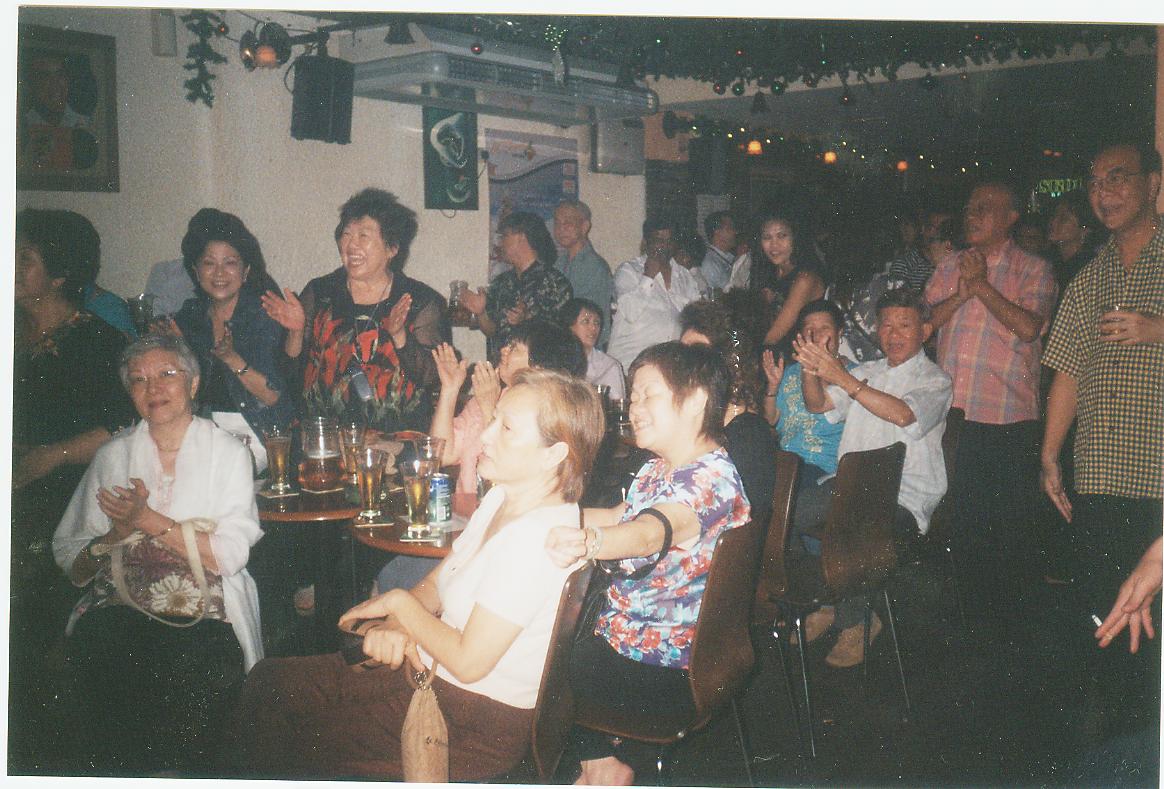
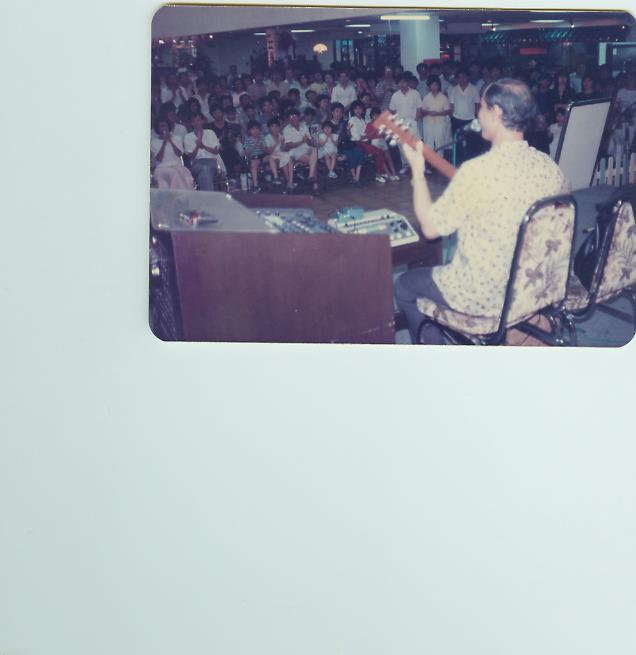
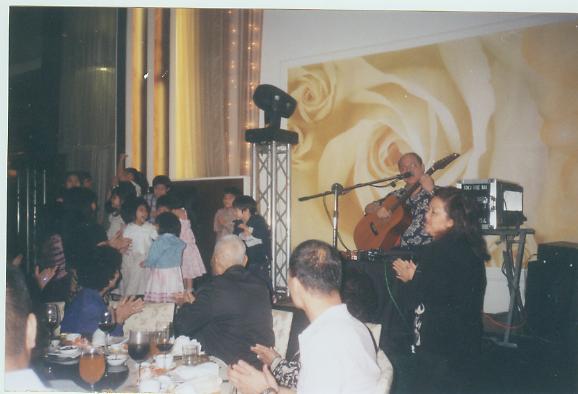
Unlike most other musicians, Alfred Ho can sing non-stop for two hours without taking the occasional sip of warm water. This is especially true when he's doing a "live" show, which is his forte and his favourite kind of performance. "Frankly, I prefer those performances in which I can interact with the audience. Playing at pubs and shopping complexes tend to be a lot more informal, the crowd will sing along or clap to your beat," says Ho. "At company dinners and other functions on the other hand, the audience is usually too busy eating to participate. They're at their best behaviour rather than their rowdy best."
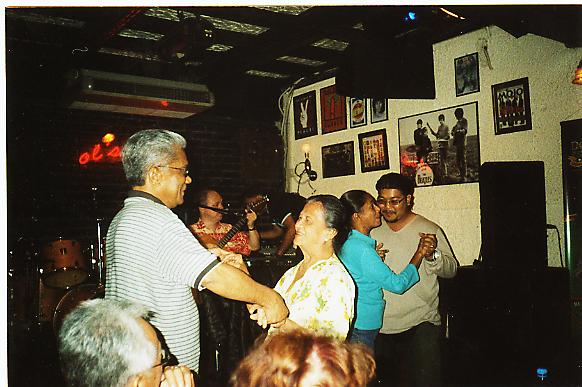
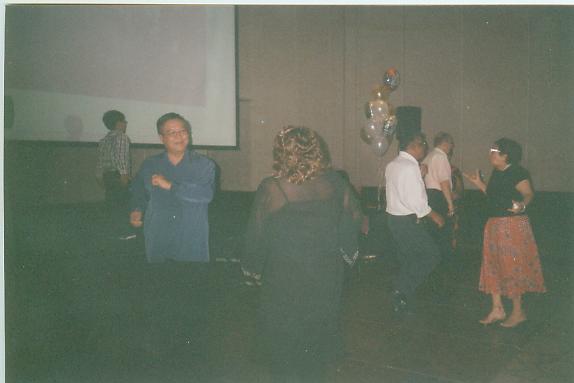
Ho should know, being a veteran performer at various scenes. Since 1985, when he moved to Kuala Lumpur to pursue a career as a full-time singer, he has performed at weddings, parties, pubs and numerous shopping complexes. The present King and Queen of the country have ballroom-danced to his music and most of the older folk listen in rapt attention, swept back in a wave of nostalgia whenever they hear him yodelling "I DON'T CARE IF TOMORROW NEVER COMES" or belting out his own version of the Bee Gees "WORDS".
He has three albums of melodious and lively oldies to his name ; SPECIAL GEMS, LOVE SONGS IN GOLD and NOSTALGIC COUNTRY AND EVERGREEN FAVOURITES. Most of the songs on these albums are familiar oldies but they are difficult to locate on existing records in the market.
It would not be wise to assume, however, that Ho can only sing oldies. Although he will not bother with heavy metal or underground genres, he does try to cater to the tastes of his younger fans. At a recent performance in Radio City, he gave a rendition of LEMON TREE. What was surprising was that it wasn't the older version but the new one popularised by the group Fool's Garden."As a singer, I must keep up with the times. Still, I will only sing songs that are suited to me. Some of the (relatively) newer songs I've done include ACHY BREAKY HEART, RIGHT HERE WAITING and ANOTHER DAY IN PARADISE.
Born in the small village of Klian Intan in Perak, Ho had an attack of measles at the age of three. This resulted in his becoming blind. He was eventually trained in telephone operating but, since young, Ho has always had a love for music. "I started playing the guitar when I was in standard six. In the beginning, I learned a few chords from a friend, the rest I picked up myself," recalls Ho.
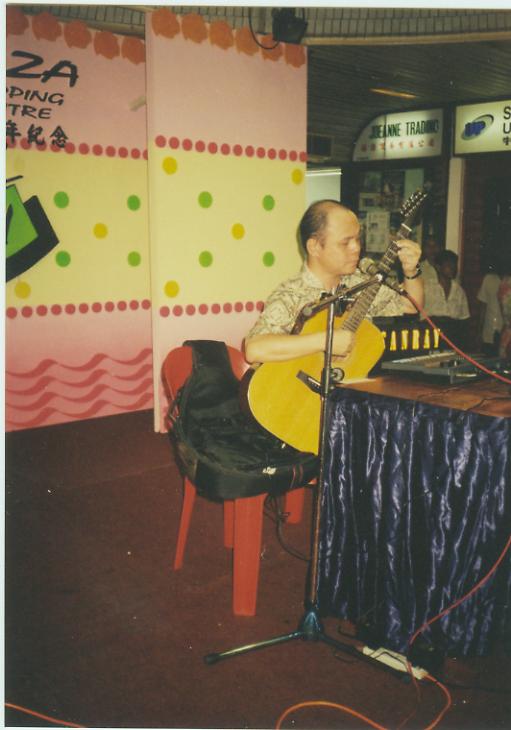
Since he began his musical career, Ho has been playing his songs using only an accoustic guitar and a drum machine. All of his shows are "live" performances. "I don't use minus one, as I feel that a true performer should be a "live" performer," states Ho with conviction. "Besides, my only form of exercise is strumming the guitar, so I want to do that as often as I can," he jokes.
Nevertheless, he isn't kidding when he says that. Ho has never done any vocal or physical warm-ups before his performances. For him, such exercises just do not seem to be necessary. "To be honest, I don't even practise that much," he admits. "Only when I feel like it." In spite of this, he sings with apparently minimal effort and boundless energy. His voice is rich, deep and quite clearly, 100 per cent natural.
Perhaps this energy has something to do with the fact that, wherever he's playing, Ho often just can't wait for the show to start. "My most exciting moment is when I'm about to begin a show. I'm raring to go. I feel like I'm in a racing car, anticipating the starting gun. I'm quite disappointed when any of my shows start late," he confesses.
"Once I start, the whole stage is mine. It's my world. Usually I find it very hard to stop, because the more I play, the more energetic I feel. I think I could be successful if I was given a chance to play overseas - I wouldn't need to take a break every 20 minutes. I could just do a marathon show!
"Besides, the minute a performer takes a break, the crowd will disperse. So when I play in a shopping mall, for instance, and my albums are selling well. I'll just keep playing. As long as I'm singing, I don't really need or want a drink. I only want a drink "after" my show is over," he insists.
By now, it is more than obvious why Ho feels that the time slot he's been given on the Time Highway Radio station is much too short. He hosts the 'The Music Connection with Alfred Ho'. "Half an hour is very little time and I'm still quite new at this, so I do get nervous sometimes. Ironically, by the time I warm up, it's time to say goodbye to my listeners. If I had a two or three hour slot, I could probably improve at a faster rate," explains Ho.
"Don't get me wrong - I'm grateful that THR has given me an opportunity to be a deejay. They're the only radio station I approached who gave me a chance," reveals Ho, who feels that sometimes all the talk about a "caring society" are mere words. "Most other companies come up with all sorts of excuses when I approach them, in effect telling me that, because I can't see, I won't be able to handle the equipment involved in deejaying. "That's UTTER NONSENSE because if they don't even give me a chance in the first place, how can I learn and improve on my skills?"
Anyhow, Ho isn't the only person who feels that his radio programme should be extended. "Quite a few of my callers and the people who write in to me have requested that as well, so I think that speaks for itself," he says. For the THR slot, THE MUSIC CONNECTION contains rather unusual fare. After all, there's a half-hour airplay of old songs on what is generally perceived as the hip, "with it", alternative station.
"A few people told me that they tuned into the station by chance and were surprised at the kind of music they heard through the airwaves. One of my callers was a 17-year-old girl who was a cancer patient and she told me she doesn't normally like old songs but really enjoyed WITCH DOCTOR. I think there'll always be a demand for such oldies, these songs are melodious and will never go out of style," relates Ho.
Ho rather enjoys hearing his own voice on the radio. "Well, apart from singing and meeting up with my friends, I like deejaying," he says, smiling. "I'm interested in writing jingles for commercials but the jingle market is difficult to break into. It's a very lucrative market and it also seems quite monopolistic," says Ho, who composed and recorded the promotional jingle for THE MUSIC CONNECTION.
He's been through a lot of tough experiences and people have put him down on many occasions but Ho remains determined to achieve the success which is his due. He isn't above the occasional dream of international recognition, either. "I once wrote a letter to Sir Cliff Richard at his fan club address , introducing myself and offering to do a charity show with him or even sing along with him in some of the songs for his future albums," reveals Ho.
And what did the esteemed Richard say? "I don't think the letter even got to his hands. After a period, I received a reply from his fan club saying that, if Cliff Richard were to grant my request, he would also have to help millions of others. Basically, the answer was a "NO".
Of course, Ho was disappointed but he wasn't fazed. He had expected such a reply and after all, he had lost nothing by asking. "I did it mostly for the fun of it; the worst thing anyone can possibly say is that, they can't help you. That's not so bad, is it?" He goes on to say that, if Elvis were alive, he'd probably get in touch with him as well, and he has thought about approaching The President of the USA, asking if he could perform at a White House function. He has also written to embassies and organizations in Las Vegas and Australia. One thing's for sure - Ho cannot be accused of lacking derring-do.
"It may sound eccentric to some people but at the end of the day, if I get my lucky break, I'll be the one who has the last laugh," declares the singer.
====================
Unlike most other musicians, Alfred Ho can sing non-stop for two hours without taking the occasional sip of warm water. This is especially true when he's doing a "live" show, which is his forte and his favourite kind of performance. "Frankly, I prefer those performances in which I can interact with the audience. Playing at pubs and shopping complexes tend to be a lot more informal, the crowd will sing along or clap to your beat," says Ho. "At company dinners and other functions on the other hand, the audience is usually too busy eating to participate. They're at their best behaviour rather than their rowdy best."
Ho should know, being a veteran performer at various scenes. Since 1985, when he moved to Kuala Lumpur to pursue a career as a full-time singer, he has performed at weddings, parties, pubs and numerous shopping complexes. The present King and Queen of the country have ballroom-danced to his music and most of the older folk listen in rapt attention, swept back in a wave of nostalgia whenever they hear him yodelling "I DON'T CARE IF TOMORROW NEVER COMES" or belting out his own version of the Bee Gees "WORDS".
He has three albums of melodious and lively oldies to his name ; SPECIAL GEMS, LOVE SONGS IN GOLD and NOSTALGIC COUNTRY AND EVERGREEN FAVOURITES. Most of the songs on these albums are familiar oldies but they are difficult to locate on existing records in the market.
It would not be wise to assume, however, that Ho can only sing oldies. Although he will not bother with heavy metal or underground genres, he does try to cater to the tastes of his younger fans. At a recent performance in Radio City, he gave a rendition of LEMON TREE. What was surprising was that it wasn't the older version but the new one popularised by the group Fool's Garden."As a singer, I must keep up with the times. Still, I will only sing songs that are suited to me. Some of the (relatively) newer songs I've done include ACHY BREAKY HEART, RIGHT HERE WAITING and ANOTHER DAY IN PARADISE.
Born in the small village of Klian Intan in Perak, Ho had an attack of measles at the age of three. This resulted in his becoming blind. He was eventually trained in telephone operating but, since young, Ho has always had a love for music. "I started playing the guitar when I was in standard six. In the beginning, I learned a few chords from a friend, the rest I picked up myself," recalls Ho.
Since he began his musical career, Ho has been playing his songs using only an accoustic guitar and a drum machine. All of his shows are "live" performances. "I don't use minus one, as I feel that a true performer should be a "live" performer," states Ho with conviction. "Besides, my only form of exercise is strumming the guitar, so I want to do that as often as I can," he jokes.
Nevertheless, he isn't kidding when he says that. Ho has never done any vocal or physical warm-ups before his performances. For him, such exercises just do not seem to be necessary. "To be honest, I don't even practise that much," he admits. "Only when I feel like it." In spite of this, he sings with apparently minimal effort and boundless energy. His voice is rich, deep and quite clearly, 100 per cent natural.
Perhaps this energy has something to do with the fact that, wherever he's playing, Ho often just can't wait for the show to start. "My most exciting moment is when I'm about to begin a show. I'm raring to go. I feel like I'm in a racing car, anticipating the starting gun. I'm quite disappointed when any of my shows start late," he confesses.
"Once I start, the whole stage is mine. It's my world. Usually I find it very hard to stop, because the more I play, the more energetic I feel. I think I could be successful if I was given a chance to play overseas - I wouldn't need to take a break every 20 minutes. I could just do a marathon show!
"Besides, the minute a performer takes a break, the crowd will disperse. So when I play in a shopping mall, for instance, and my albums are selling well. I'll just keep playing. As long as I'm singing, I don't really need or want a drink. I only want a drink "after" my show is over," he insists.
By now, it is more than obvious why Ho feels that the time slot he's been given on the Time Highway Radio station is much too short. He hosts the 'The Music Connection with Alfred Ho'. "Half an hour is very little time and I'm still quite new at this, so I do get nervous sometimes. Ironically, by the time I warm up, it's time to say goodbye to my listeners. If I had a two or three hour slot, I could probably improve at a faster rate," explains Ho.
"Don't get me wrong - I'm grateful that THR has given me an opportunity to be a deejay. They're the only radio station I approached who gave me a chance," reveals Ho, who feels that sometimes all the talk about a "caring society" are mere words. "Most other companies come up with all sorts of excuses when I approach them, in effect telling me that, because I can't see, I won't be able to handle the equipment involved in deejaying. "That's UTTER NONSENSE because if they don't even give me a chance in the first place, how can I learn and improve on my skills?"
Anyhow, Ho isn't the only person who feels that his radio programme should be extended. "Quite a few of my callers and the people who write in to me have requested that as well, so I think that speaks for itself," he says. For the THR slot, THE MUSIC CONNECTION contains rather unusual fare. After all, there's a half-hour airplay of old songs on what is generally perceived as the hip, "with it", alternative station.
"A few people told me that they tuned into the station by chance and were surprised at the kind of music they heard through the airwaves. One of my callers was a 17-year-old girl who was a cancer patient and she told me she doesn't normally like old songs but really enjoyed WITCH DOCTOR. I think there'll always be a demand for such oldies, these songs are melodious and will never go out of style," relates Ho.
Ho rather enjoys hearing his own voice on the radio. "Well, apart from singing and meeting up with my friends, I like deejaying," he says, smiling. "I'm interested in writing jingles for commercials but the jingle market is difficult to break into. It's a very lucrative market and it also seems quite monopolistic," says Ho, who composed and recorded the promotional jingle for THE MUSIC CONNECTION.
He's been through a lot of tough experiences and people have put him down on many occasions but Ho remains determined to achieve the success which is his due. He isn't above the occasional dream of international recognition, either. "I once wrote a letter to Sir Cliff Richard at his fan club address , introducing myself and offering to do a charity show with him or even sing along with him in some of the songs for his future albums," reveals Ho.
And what did the esteemed Richard say? "I don't think the letter even got to his hands. After a period, I received a reply from his fan club saying that, if Cliff Richard were to grant my request, he would also have to help millions of others. Basically, the answer was a "NO".
Of course, Ho was disappointed but he wasn't fazed. He had expected such a reply and after all, he had lost nothing by asking. "I did it mostly for the fun of it; the worst thing anyone can possibly say is that, they can't help you. That's not so bad, is it?" He goes on to say that, if Elvis were alive, he'd probably get in touch with him as well, and he has thought about approaching The President of the USA, asking if he could perform at a White House function. He has also written to embassies and organizations in Las Vegas and Australia. One thing's for sure - Ho cannot be accused of lacking derring-do.
"It may sound eccentric to some people but at the end of the day, if I get my lucky break, I'll be the one who has the last laugh," declares the singer.
Aug 29, 2007
The Star - Vicky Ooi (19th Nov 1997)
ARTISTE SPEAKS OUT AGAINST PREJUDICE
===================================
Singer Alfred Ho does not believe in meekly waiting for things to happen. Instead, he constantly strives for the best in life. And it has been difficult every step of the way.
He doesn't expect people to hand everything to him on a silver platter just because he is blind. He only wants to be given a fair chance in spite of his blindness. Above all he wishes for sincerity.
Both are hard to come by, despite Malaysians' general generosity with money. Being one who bluntly speaks his mind, Ho inadvertently bruises a few egos.
It will not stop him from being honest, he affirms, nor will it prejudice, intimidate him or make him give up his dream.
That dream is to become an instantly recognisable voice heard in Malaysian homes. Yes, he wants to be a radio deejay.
"Why do the blind have to be either telephone operators or stenographers? It is frustrating to find people restricting us to these jobs. We are not so much disabled by our sightlessness than the narrow-minded attitude of others", lamented Ho.
Ho's recent experiences as a DJ in one of the local radio stations was to say the least, unpleasant. "It was mainly the station management's insincerity that frustrated me. If I was lousy at the job, they ought to have told me so. They could choose to end my services or train me up, but they did neither. I was very willing to learn to operate the studio equipment but no one was willing to teach me," Ho said.
Still the 48 year old recording artiste continues to hope the handicapped will not be discriminated in employment and that they will be treated with respect and consideration.
===================================
Singer Alfred Ho does not believe in meekly waiting for things to happen. Instead, he constantly strives for the best in life. And it has been difficult every step of the way.
He doesn't expect people to hand everything to him on a silver platter just because he is blind. He only wants to be given a fair chance in spite of his blindness. Above all he wishes for sincerity.
Both are hard to come by, despite Malaysians' general generosity with money. Being one who bluntly speaks his mind, Ho inadvertently bruises a few egos.
It will not stop him from being honest, he affirms, nor will it prejudice, intimidate him or make him give up his dream.
That dream is to become an instantly recognisable voice heard in Malaysian homes. Yes, he wants to be a radio deejay.
"Why do the blind have to be either telephone operators or stenographers? It is frustrating to find people restricting us to these jobs. We are not so much disabled by our sightlessness than the narrow-minded attitude of others", lamented Ho.
Ho's recent experiences as a DJ in one of the local radio stations was to say the least, unpleasant. "It was mainly the station management's insincerity that frustrated me. If I was lousy at the job, they ought to have told me so. They could choose to end my services or train me up, but they did neither. I was very willing to learn to operate the studio equipment but no one was willing to teach me," Ho said.
Still the 48 year old recording artiste continues to hope the handicapped will not be discriminated in employment and that they will be treated with respect and consideration.
The Edge - Lim Yin Foong (16th Jan 1995)
RE : THE HOPES OF ALFRED HO
==========================
His warm mellow voice has serenaded many over the radio and he has often performed his repertoire of songs to local and foreign audiences.
With such a following, and the fact that he has been on the local music scene for more than 20 years, one would expect Alfred Ho to be a success by now.
Yet, even with the release of his album "Special Gems" and with another in the pipeline, Ho's efforts to succeed seem to have been one long struggle since the blind singer's decision to turn full-time entertainer in 1984.
His is a story of determination and grit and constantly picking himself up again and again through a series of stumbling blocks from unresponsive record companies to unscrupulous clients.
Despite positive response from his listeners, Ho is simply striving to make ends meet for himself by performing at company dinners and through occasional sales of his albums.
As a former semi-finalist of RTM's Bakat TV in the 70's, Ho is definitely not lacking in talent but is in need of professional business management and strong marketing. This Ho frankly admits he does not possess.
"I know nothing about business", he says. This perhaps explains why he has often been given the run-around by companies and music stores and those whom he has approached for aid. But Ho is one pretty determined man and his actions tell. His experiences with his previous album has not deterred him from producing his second album titled "Love Songs In Gold", even though "Special Gems" received lukewarm response from recording companies and music stores.
This resulted in poor distribution of Ho's cassettes and CDs, which affected his income, although he received very encouraging response from the public, who had heard his songs over the radio.
"My decision to do a second album is because of the positive response I received for "Special Gems" from listeners. I even got encouraging calls asking me to release a second album", relates the 45 year old singer. Whatever lack of experience Ho has in marketing and distributing his albums, he has no problems identifying the niche market to whom he aims his music, The Nostalgic listeners.
"It's mainly an older market", he says adding that his music also appeals to many "youngsters", judging from the sales of his "Special Gems" albums. Ho feels that his focus on old favourites could not have been more timely as presently, many young groups and singers are coming out with remakes of old songs. "I believe that old songs are those that never die", he adds.
His latest album, set to be released in time for Valentine's Day, will feature old love songs with a difference. Ho says' "They are mostly rare songs, like Bobby Darin's (18 yellow roses) and (I'll Pretend) by Des O'Connor. They will be recorded as close as possible to the originals, to capture the song's nostalgia".
For "Love Songs In Gold", Ho has decided to invest the returns of his first album to having the new album recorded in a professional studio.
This will be a first for the singer who in the past has always done his own recording of his albums. "I will try to do a better album and to make it more impressive. Music-wise, it will be better because more musical instruments will be featured", he states.
Ho has been musically inclined since he learnt how to play the guitar while studying at Penang's St. Nicholas School for the blind. His early days in music include being the founder and member of a four-piece band known as The Sharks, solo performances in pubs and the highlight ; becoming a semi-finalist in RTM's Bakat TV during the 70's.
Prior to "Special Gems", Ho had come up with two Ep vinyl records compromising his own compositions. These days, however, he hardly has time to work on his own songs. "I am too busy learning songs. I sing mainly old favourites because this is what many people want to hear but I also have to keep up with the times and learn some current songs", he adds.
Ho's efforts to achieve success in his field is not just some dream for stardom and fame but rather to achieve that as a means to an end. His experiences have inspired him to use his talent to help people who like himself, are disabled.
For starters, he hopes to eventually set up his own recording studio where he would be able to help other handicapped singers and performers cut their own albums. "I believe there is a lot of talent amongst the handicapped and they should be given opportunities", he says, adding that he would also like to employ disabled people in the studio's workforce.
According to Ho, he has often volunteered his skills to help raise funds for the handicapped, as he feels that not enough is being done for them. "For instance, I feel there is a pressing need for a revolving fund or welfare aid for disabled people who have retired from their jobs and lost their steady flow of income".
As for his own music efforts, Ho believes that what he needs is more professional efforts and proper distributions of his albums. "If I don't do anything, there is nothing. But if I do, chances are there will be something", he adds simply.
And if perseverance ever had a name, it would definitely be Alfred Ho.
==========================
His warm mellow voice has serenaded many over the radio and he has often performed his repertoire of songs to local and foreign audiences.
With such a following, and the fact that he has been on the local music scene for more than 20 years, one would expect Alfred Ho to be a success by now.
Yet, even with the release of his album "Special Gems" and with another in the pipeline, Ho's efforts to succeed seem to have been one long struggle since the blind singer's decision to turn full-time entertainer in 1984.
His is a story of determination and grit and constantly picking himself up again and again through a series of stumbling blocks from unresponsive record companies to unscrupulous clients.
Despite positive response from his listeners, Ho is simply striving to make ends meet for himself by performing at company dinners and through occasional sales of his albums.
As a former semi-finalist of RTM's Bakat TV in the 70's, Ho is definitely not lacking in talent but is in need of professional business management and strong marketing. This Ho frankly admits he does not possess.
"I know nothing about business", he says. This perhaps explains why he has often been given the run-around by companies and music stores and those whom he has approached for aid. But Ho is one pretty determined man and his actions tell. His experiences with his previous album has not deterred him from producing his second album titled "Love Songs In Gold", even though "Special Gems" received lukewarm response from recording companies and music stores.
This resulted in poor distribution of Ho's cassettes and CDs, which affected his income, although he received very encouraging response from the public, who had heard his songs over the radio.
"My decision to do a second album is because of the positive response I received for "Special Gems" from listeners. I even got encouraging calls asking me to release a second album", relates the 45 year old singer. Whatever lack of experience Ho has in marketing and distributing his albums, he has no problems identifying the niche market to whom he aims his music, The Nostalgic listeners.
"It's mainly an older market", he says adding that his music also appeals to many "youngsters", judging from the sales of his "Special Gems" albums. Ho feels that his focus on old favourites could not have been more timely as presently, many young groups and singers are coming out with remakes of old songs. "I believe that old songs are those that never die", he adds.
His latest album, set to be released in time for Valentine's Day, will feature old love songs with a difference. Ho says' "They are mostly rare songs, like Bobby Darin's (18 yellow roses) and (I'll Pretend) by Des O'Connor. They will be recorded as close as possible to the originals, to capture the song's nostalgia".
For "Love Songs In Gold", Ho has decided to invest the returns of his first album to having the new album recorded in a professional studio.
This will be a first for the singer who in the past has always done his own recording of his albums. "I will try to do a better album and to make it more impressive. Music-wise, it will be better because more musical instruments will be featured", he states.
Ho has been musically inclined since he learnt how to play the guitar while studying at Penang's St. Nicholas School for the blind. His early days in music include being the founder and member of a four-piece band known as The Sharks, solo performances in pubs and the highlight ; becoming a semi-finalist in RTM's Bakat TV during the 70's.
Prior to "Special Gems", Ho had come up with two Ep vinyl records compromising his own compositions. These days, however, he hardly has time to work on his own songs. "I am too busy learning songs. I sing mainly old favourites because this is what many people want to hear but I also have to keep up with the times and learn some current songs", he adds.
Ho's efforts to achieve success in his field is not just some dream for stardom and fame but rather to achieve that as a means to an end. His experiences have inspired him to use his talent to help people who like himself, are disabled.
For starters, he hopes to eventually set up his own recording studio where he would be able to help other handicapped singers and performers cut their own albums. "I believe there is a lot of talent amongst the handicapped and they should be given opportunities", he says, adding that he would also like to employ disabled people in the studio's workforce.
According to Ho, he has often volunteered his skills to help raise funds for the handicapped, as he feels that not enough is being done for them. "For instance, I feel there is a pressing need for a revolving fund or welfare aid for disabled people who have retired from their jobs and lost their steady flow of income".
As for his own music efforts, Ho believes that what he needs is more professional efforts and proper distributions of his albums. "If I don't do anything, there is nothing. But if I do, chances are there will be something", he adds simply.
And if perseverance ever had a name, it would definitely be Alfred Ho.
Aug 23, 2007
The Star Metro Diary - L C Ng

THE STAR - METRO DIARY
by L. C. NG
ALFRED HO MEETS POP IDOL BRIAN HYLAND
====================================
It can be quite an experience when one graduates from being a fan to being a friend of one's pop idol, as local blind singer Alfred Ho has found out.
"When I heard that Brian Hyland was in town, I tracked him down to the Damansara Westpoint Club where he was performing and they told me that he was staying at the Merlin (now Concorde KL).
"I called him at the hotel and asked for an interview for Newscast - a tape news magazine for the blind- and he obliged and told me to meet him at the hotel the next day," Alfred said.
And when Alfred, who had been a Brian Hyland fan since his teenage years, turned up at the hotel the next day, Brian was ready - and not just for the interview.
Armed with guitars, the two music lovers had a jam session which lasted about three hours. For Alfred, who had only dared to hope for an interview, the jam session was too good to be true."Brian is one of the nicest persons I have ever met. There were no airs about him. He struck me as a very warm, obliging and friendly person."
Alfred added that he sang a few songs and joined Brian in singing some of his oldies, including, GINNY COME LATELY and SEALED WITH A KISS.
"He invited me to his show that evening," Alfred said. Halfway through the show that evening, Brian invited Alfred onto the stage to do the number BYE BYE LOVE together with him.
"Never have I ever imagined that I would have the chance to perform a number on stage with Brian," Alfred said afterwards.
But that was not all. The next evening, immediately after his own show at the Damansara Westpoint Club, Brian Hyland went to the Cotton Club to watch Alfred perform. Brian later obliged the audience by singing two of his songs at the Cotton Club.
"I have always been A Brian Hyland fan but I hope I can now consider myself his friend," said Alfred, beaming from ear to ear.
The Star - Looi Lai Yee (April 24th 1992)
THE STAR,
APRIL 24TH 1992
by LOOI LAI YEE
THE PATRICK - ALFRED SHOW
=========================
Cinta's Passage To The Future charity drive on Tuesday brought two old chums together for a night of nostalgia, not only for themselves but also for the patrons who were at the discotheque.
They were 'smooth-talker' Patrick Teoh and blind singer/guitarist Alfred Ho, who share a 20 year friendship. And only Patrick could get away with telling everyone how, whenever Alfred sang his own country and western composition TRAIN TO TENNESSEE, appreciative women in the audience would hurl their undergarments at him.
The one-time TV newscaster, who met Alfred some 22 years ago during a Rediffusion audition, warmed the stage at Cinta before stepping back for his friend, who brought on warm memories of the days of Elvis Presley, Cliff Richard, Roy Orbison and the likes.
Alfred, with his accoustic guitar and rhythm machine, took everybody down memory lane, singing along to hits like Pretty Woman, Unchained Melody, Blue Suede Shoes, Fall In Love Again, La Bamba, a medley of old classics and his very own Train To Tennessee.
PATRICK HELPED LAUNCH MY SINGING CAREER, SAYS ALFRED
===================================================
"Patrick is instrumental in launching my singing career," says Alfred Ho.
"No, it was his distinctive voice that got him where he is," contradicted Patrick Teoh.''
In an interview before their act at Cinta, the two Perak born buddies gleefully reminisced the good (and bad) old days. Alfred was discovered by Patrick one day in 1970 when the latter, then working as an assistant programme manager with Rediffusion, conducted the audition.
Said Patrick, "I was impressed with his distinctive vocals." The break advanced Alfred in the music field. He was a semi-finalist in the now defunct RTM Bakat TV in 1971, and has since appeared regularly in the station's entertainment programmes.
Right after Bakat TV, he released a four-track EP of his own compositions, namely, TRAIN TO TENNESSEE, SWEET RITA DIVINE, WENDY'S SONG and TEACHER'S LOVE SONG.
"I was really grateful to Patrick for taking the initiative during his radio deejaying days to play my songs, says the 42 year old singer. But it has been ages since he penned songs.
At this juncture Patrick chided him. "Alfred should compose more songs. He's talented. Know what his excuse is? - Lazy! Can you beat that?"
Throughout the years, Alfred who used to pop into the studios when Patrick was recording his programmes, never lost contact with his friend who has become a household name. Ho plays rock and roll, country and western and ballads but occasionally does contemporary numbers like Richard Marx's 'RIGHT HERE WAITING'.
Alfred had his early education at St. Nicholas in Penang, his secondary at St. Xavier's Institution before enrolling with the Vocational Centre for the Blind in Kuala Lumpur. A former telephone operator with the island's then City Council from 1974 to 1983, Alfred who is basically a self-taught musician with guidance from a St. Nicholas schoolmate, quit his job to go into the entertainment business.
"We haven't worked together for a long time. This reunion at Cinta is extra meaningful in that we are also chipping in to a good cause," said the duo
APRIL 24TH 1992
by LOOI LAI YEE
THE PATRICK - ALFRED SHOW
=========================
Cinta's Passage To The Future charity drive on Tuesday brought two old chums together for a night of nostalgia, not only for themselves but also for the patrons who were at the discotheque.
They were 'smooth-talker' Patrick Teoh and blind singer/guitarist Alfred Ho, who share a 20 year friendship. And only Patrick could get away with telling everyone how, whenever Alfred sang his own country and western composition TRAIN TO TENNESSEE, appreciative women in the audience would hurl their undergarments at him.
The one-time TV newscaster, who met Alfred some 22 years ago during a Rediffusion audition, warmed the stage at Cinta before stepping back for his friend, who brought on warm memories of the days of Elvis Presley, Cliff Richard, Roy Orbison and the likes.
Alfred, with his accoustic guitar and rhythm machine, took everybody down memory lane, singing along to hits like Pretty Woman, Unchained Melody, Blue Suede Shoes, Fall In Love Again, La Bamba, a medley of old classics and his very own Train To Tennessee.
PATRICK HELPED LAUNCH MY SINGING CAREER, SAYS ALFRED
===================================================
"Patrick is instrumental in launching my singing career," says Alfred Ho.
"No, it was his distinctive voice that got him where he is," contradicted Patrick Teoh.''
In an interview before their act at Cinta, the two Perak born buddies gleefully reminisced the good (and bad) old days. Alfred was discovered by Patrick one day in 1970 when the latter, then working as an assistant programme manager with Rediffusion, conducted the audition.
Said Patrick, "I was impressed with his distinctive vocals." The break advanced Alfred in the music field. He was a semi-finalist in the now defunct RTM Bakat TV in 1971, and has since appeared regularly in the station's entertainment programmes.
Right after Bakat TV, he released a four-track EP of his own compositions, namely, TRAIN TO TENNESSEE, SWEET RITA DIVINE, WENDY'S SONG and TEACHER'S LOVE SONG.
"I was really grateful to Patrick for taking the initiative during his radio deejaying days to play my songs, says the 42 year old singer. But it has been ages since he penned songs.
At this juncture Patrick chided him. "Alfred should compose more songs. He's talented. Know what his excuse is? - Lazy! Can you beat that?"
Throughout the years, Alfred who used to pop into the studios when Patrick was recording his programmes, never lost contact with his friend who has become a household name. Ho plays rock and roll, country and western and ballads but occasionally does contemporary numbers like Richard Marx's 'RIGHT HERE WAITING'.
Alfred had his early education at St. Nicholas in Penang, his secondary at St. Xavier's Institution before enrolling with the Vocational Centre for the Blind in Kuala Lumpur. A former telephone operator with the island's then City Council from 1974 to 1983, Alfred who is basically a self-taught musician with guidance from a St. Nicholas schoolmate, quit his job to go into the entertainment business.
"We haven't worked together for a long time. This reunion at Cinta is extra meaningful in that we are also chipping in to a good cause," said the duo
The Star - Tunku Shahariah (1994)
THE STAR 1994
by TUNKU SHAHARIAH
ALFRED'S DISAPPOINTED WITH LOCAL SPONSORS
=========================================
The smooth strummings of the guitar and melodious voice of the singer enveloped the hall. The guitarist was one of the guest artiste at the chinese new year charity bash at Penang Turf Club sponsored by Pan-Malaysian Pools Bhd recently. The audience recognized him - Alfred Ho - a blind but popular local singer of the 70's, dubbed the local "Jose Feliciano". He is hoping to make a comeback in the local musical scene.
Alfred had lamented that his blindness had always been a setback in his quest for a musical career. But after talking to him, one would have thought he was irrepressible. He had his chirpy voice which gave the impression he has never given up trying.
Alfred recalled that local recording companies had refused to help launch his self-made album, recorded last August, titled "Special Gems". The recording of the album cost him a hefty RM10,000, a big sum, saved from his singing stints in lounges and pubs. He was miffed when he could not find sponsors to finance the marketing of the album. Curious, I requested for a chance to listen to his "Special Gems" edition. The sound track, with it's limited accoustics and backing, did not do justice to his voice. It probably boils down to the lack of financial back-up for a more ornate and elaborate recording.
He said a few recording companies like WEA, BMG and PONYCANYON accepted his demo tapes but did not get back to him. Despite his failure to find sponsors to market his album, it did not deter him from further musical endeavours.
Recently,he completed another album titled "Love Songs In Gold". Alfred is hoping there would be sponsors to help cover costs in the production and marketing of the album.
"What I want is recognition. My only difference with other performers is my blindness," lamented Alfred, who adds, "why this discrimination in the asian society? I mean, what about Stevie Wonder, who despite his blindness, had made it in the USA music scene."
by TUNKU SHAHARIAH
ALFRED'S DISAPPOINTED WITH LOCAL SPONSORS
=========================================
The smooth strummings of the guitar and melodious voice of the singer enveloped the hall. The guitarist was one of the guest artiste at the chinese new year charity bash at Penang Turf Club sponsored by Pan-Malaysian Pools Bhd recently. The audience recognized him - Alfred Ho - a blind but popular local singer of the 70's, dubbed the local "Jose Feliciano". He is hoping to make a comeback in the local musical scene.
Alfred had lamented that his blindness had always been a setback in his quest for a musical career. But after talking to him, one would have thought he was irrepressible. He had his chirpy voice which gave the impression he has never given up trying.
Alfred recalled that local recording companies had refused to help launch his self-made album, recorded last August, titled "Special Gems". The recording of the album cost him a hefty RM10,000, a big sum, saved from his singing stints in lounges and pubs. He was miffed when he could not find sponsors to finance the marketing of the album. Curious, I requested for a chance to listen to his "Special Gems" edition. The sound track, with it's limited accoustics and backing, did not do justice to his voice. It probably boils down to the lack of financial back-up for a more ornate and elaborate recording.
He said a few recording companies like WEA, BMG and PONYCANYON accepted his demo tapes but did not get back to him. Despite his failure to find sponsors to market his album, it did not deter him from further musical endeavours.
Recently,he completed another album titled "Love Songs In Gold". Alfred is hoping there would be sponsors to help cover costs in the production and marketing of the album.
"What I want is recognition. My only difference with other performers is my blindness," lamented Alfred, who adds, "why this discrimination in the asian society? I mean, what about Stevie Wonder, who despite his blindness, had made it in the USA music scene."
The Star - Chuah Siew Eng (18th April 1995)
THE STAR,
TUESDAY APRIL 18TH 1995
by CHUAH SIEW ENG
FUTURE LOOKS BRIGHT FOR HO
==========================
Five thousand ringgit. That was what an Alfred Ho cassette tape fetched at an impromptu auction for charity two years ago.
It was at the second Asia Pacific Life Insurance Congress at the Putra World Trade Centre, Kuala Lumpur. The 8,000 odd international delegates were sitting restlessly after hours of passive listening, when a surprise announcement came ; a singer would be entertaining them as the next speaker couldn't make it at the eleventh hour.
The singer turned out to be Alfred Ho, of course. Organising chairman Dr. Michael Chong had providentially spotted him at The Mall (across the road), where he was promoting his debut album Special Gems. Faced with an unexpected gap in the agenda, Chong thought Ho would be a welcome substitute.
Ho was more than that. He brought the capacity crowd at Dewan Merdeka to it's feet with his rendition of evergreen songs. Seeing the rousing response of the crowd, Chong seized the opportunity to hold an auction of three of Ho's tapes for charity. From RM400, the bidding was fast approaching RM2,000 when a Singaporean lady made the stunning offer which no one could top. Maybe the lady was very generous and maybe Chong demonstrated how good a persuader he was. But try explaining the thousands of people who sang and clapped along, not in half-hearted spurts either, but with genuine pleasure.
And if you think that was a normal reaction after hours of inactivity, what about the enthusiastic response from the crowd at KL's Sungei Wang Plaza recently, where Ho's show lasted an hour more than the scheduled 45 minutes. It's a rare singer who can incite an audience into singing along ; it's the sort of chemistry that requires stimulation by the senses and you wonder how Ho keeps up his end of the rapport without being able to see to gauge how well he is doing.
Because Ho, who was born in Klian Intan, Perak, has been blind since he was three. His blindness has everything to do with who he is and what he is doing now, so it's illogical to skirt around a fact with which he has lived almost all of his 45 years.
Initially, Ho thought of playing the guitar as just a hobby. He started performing when he couldn't get a job soon after he finished school. He turned full-time in 1984 despite friendly discouragement, leaving his 10 year post as a telephone operator at the Penang Municipal Council.
"I was willing to risk it. Something told me to go on. Maybe I was spurred by people who have complimented me on my singing." says Ho during an interview at his home. So he came to Kuala Lumpur and set about making himself known, accepting shows at shopping complexes for "very little".
It has been a long, lonely struggle, full of rebuffs and heartaches, but at least at the end of ten years, he has two albums to show for it. Released last month, his second album, LOVE SONGS IN GOLD contains 22 everlasting songs. Ho says, "The main thing is to create a feeling of nostalgia. I stick to the original rendition but try to improve it at the same time." His repertoire is not limited to oldies. It's just that for his albums, he'd rather feature rare songs because contemporary tunes are sung all the time. "There's a trend of reviving old songs now. They've just been given a different beat. But there's no escaping that they are oldies." Ho adds that the response to his album is such that people are already asking for his third album.
If he weren't handicapped, Ho would have made a no-nonsense boss who gets work done. At one time or another, everybody gets the runaround and most of us are resigned to it. But Ho is not one to take things lightly. He pulls no punches and tells of the treatment he gets from unscrupulous people, even organisations and corporations, who know that he cannot retaliate in kind, thinking of him as a charity case. It is disquieting to hear about the bullies Ho has had to deal with. He says he has even been threatened should he dare to expose the deception in some so-called charity projects. In the face of such arrogance and injustice, you wouldn't blame Ho if he has become embittered and given up.
Ho did became difficult. Some people even thought he was a pain in the neck. But he didn't give up. All he needs now is for his fans to rally behind him. Grassroot support is necessary for all artistes but in ho's case, it is pivotal because his audience is just about the only people who can see him through his career.
TUESDAY APRIL 18TH 1995
by CHUAH SIEW ENG
FUTURE LOOKS BRIGHT FOR HO
==========================
Five thousand ringgit. That was what an Alfred Ho cassette tape fetched at an impromptu auction for charity two years ago.
It was at the second Asia Pacific Life Insurance Congress at the Putra World Trade Centre, Kuala Lumpur. The 8,000 odd international delegates were sitting restlessly after hours of passive listening, when a surprise announcement came ; a singer would be entertaining them as the next speaker couldn't make it at the eleventh hour.
The singer turned out to be Alfred Ho, of course. Organising chairman Dr. Michael Chong had providentially spotted him at The Mall (across the road), where he was promoting his debut album Special Gems. Faced with an unexpected gap in the agenda, Chong thought Ho would be a welcome substitute.
Ho was more than that. He brought the capacity crowd at Dewan Merdeka to it's feet with his rendition of evergreen songs. Seeing the rousing response of the crowd, Chong seized the opportunity to hold an auction of three of Ho's tapes for charity. From RM400, the bidding was fast approaching RM2,000 when a Singaporean lady made the stunning offer which no one could top. Maybe the lady was very generous and maybe Chong demonstrated how good a persuader he was. But try explaining the thousands of people who sang and clapped along, not in half-hearted spurts either, but with genuine pleasure.
And if you think that was a normal reaction after hours of inactivity, what about the enthusiastic response from the crowd at KL's Sungei Wang Plaza recently, where Ho's show lasted an hour more than the scheduled 45 minutes. It's a rare singer who can incite an audience into singing along ; it's the sort of chemistry that requires stimulation by the senses and you wonder how Ho keeps up his end of the rapport without being able to see to gauge how well he is doing.
Because Ho, who was born in Klian Intan, Perak, has been blind since he was three. His blindness has everything to do with who he is and what he is doing now, so it's illogical to skirt around a fact with which he has lived almost all of his 45 years.
Initially, Ho thought of playing the guitar as just a hobby. He started performing when he couldn't get a job soon after he finished school. He turned full-time in 1984 despite friendly discouragement, leaving his 10 year post as a telephone operator at the Penang Municipal Council.
"I was willing to risk it. Something told me to go on. Maybe I was spurred by people who have complimented me on my singing." says Ho during an interview at his home. So he came to Kuala Lumpur and set about making himself known, accepting shows at shopping complexes for "very little".
It has been a long, lonely struggle, full of rebuffs and heartaches, but at least at the end of ten years, he has two albums to show for it. Released last month, his second album, LOVE SONGS IN GOLD contains 22 everlasting songs. Ho says, "The main thing is to create a feeling of nostalgia. I stick to the original rendition but try to improve it at the same time." His repertoire is not limited to oldies. It's just that for his albums, he'd rather feature rare songs because contemporary tunes are sung all the time. "There's a trend of reviving old songs now. They've just been given a different beat. But there's no escaping that they are oldies." Ho adds that the response to his album is such that people are already asking for his third album.
If he weren't handicapped, Ho would have made a no-nonsense boss who gets work done. At one time or another, everybody gets the runaround and most of us are resigned to it. But Ho is not one to take things lightly. He pulls no punches and tells of the treatment he gets from unscrupulous people, even organisations and corporations, who know that he cannot retaliate in kind, thinking of him as a charity case. It is disquieting to hear about the bullies Ho has had to deal with. He says he has even been threatened should he dare to expose the deception in some so-called charity projects. In the face of such arrogance and injustice, you wouldn't blame Ho if he has become embittered and given up.
Ho did became difficult. Some people even thought he was a pain in the neck. But he didn't give up. All he needs now is for his fans to rally behind him. Grassroot support is necessary for all artistes but in ho's case, it is pivotal because his audience is just about the only people who can see him through his career.
The Star - Joseph Loh (3rd Dec 2006)
SUNDAY STAR
3RD DECEMBER 2006
by JOSEPH LOH
TOUCHING HEARTS WITH HIS MUSIC
=============================
For blind people, the sense of touch is one of the ways they perceive the world around them. However, blind singer-guitarist Alfred Ho turns the tables around and touches the hearts of people - with the magic of his music. The music industry is undoubtedly a hostile business but Ho has resolutely stuck to his chosen vocation as a professional musician for more than 20 years now.
It has not been easy for Ho and he laments on how difficult it is to make ends meet but he has never once looked back. Ho describes how he broke into the music business back in the 1970's when he was unemployed despite having been trained as a telephone operator.
"In those days, there was redifusion (the old cable-radio service) and I wrote in to them and eventually got roped in by Patrick Teoh and Royston Goh to do a series of programmes called the TAKE FIVE show."
While the show was an achievement for Ho, it did not get him national recognition due to the limited areas of coverage (mainly in big towns) in Malaysia.
His big break eventually came but it was an accident of sorts. He recalls, "I was asked to appear on a television programme called BAKAT TV and showed up to perform but little did I know it was a competition. Since I had already gone all the way, I decided to participate and I actually reached the semi-finals. After that, I was given the chance to participate in a lot of TV programmes but eventually settled on a job as a telephone operator. But my job brought in only RM190 a month and I had to supplement my income by performing."
Ho's passion for music continued to turn strongly and after 10 years on the job, he took the plunge and moved to Kuala Lumpur to seek his fortune - and has been doing it ever since.
"It was a big risk to take and I was only paid RM10 for a whole night of singing but of course RM10 went a lot further then."
Ho's willingness to take hard knocks only hints at how much passion he has for music. "Music is a part of my life - no, actually it is my life. You may starve me of food but not music. I am either playing or listening to music every day."
Ho remembers the first song he ever learnt to play on the guitar. "It was called NO MORE (the english version of LA PALOMA) and I learnt it because there were only two chords to play."
These days, Ho's repertoire of songs is voluminous and chances are he will be able to play almost any golden oldies they you ask him to. Ho reveals that he does not refer to any notes during his performances nor does he plan it out. So how does he gauge what the audience wants?
"I let them participate where possible. In every show the audience plays a very important part and it is more than just applause. I like it best when there is interaction and they sing along with me. If I can bring joy to people, I am happy myself."
Watching Ho in action shows what a confident performer he is. "There are no inhibitions as far as I am concerned - I do not feel nervous. Some people say I only have to open my mouth to make money but they do not realise the amount of work I have put in to memorize all the lyrics and the melodies of songs to play."
Admittedly, Ho's music is not for everybody and on the surface appears to be less appealing to the younger generation.
"There is more musicality in older music. It is more melodious and you can relate to the words which are very meaningful."
But Ho feels that the younger generation are enjoying the oldies in some way, with the increasing trend of using excerpts of them in new songs.
"For example, some of the old songs are masked with rap in between and they (the artistes) use it because they realise it is good!"
Conversely, Ho does not relate to new music but there are always exceptions. "Sorry to say a lot of the music today does not suit my taste but once in a while there are good ones. A song like ACHY BREAKY HEART for example, is quite good and I will sing it. There are other songs such as RIGHT HERE WAITING and NO MATTER WHAT but they are few and far between."
Regardless of the songs Ho plays, be it old or new, he will not rest on his laurels. Ho concludes, "I am still learning and music is a constant learning process. The day that you say you are good means that you are stagnant. And it is not only music - it applies to everything else in life as well."
3RD DECEMBER 2006
by JOSEPH LOH
TOUCHING HEARTS WITH HIS MUSIC
=============================
For blind people, the sense of touch is one of the ways they perceive the world around them. However, blind singer-guitarist Alfred Ho turns the tables around and touches the hearts of people - with the magic of his music. The music industry is undoubtedly a hostile business but Ho has resolutely stuck to his chosen vocation as a professional musician for more than 20 years now.
It has not been easy for Ho and he laments on how difficult it is to make ends meet but he has never once looked back. Ho describes how he broke into the music business back in the 1970's when he was unemployed despite having been trained as a telephone operator.
"In those days, there was redifusion (the old cable-radio service) and I wrote in to them and eventually got roped in by Patrick Teoh and Royston Goh to do a series of programmes called the TAKE FIVE show."
While the show was an achievement for Ho, it did not get him national recognition due to the limited areas of coverage (mainly in big towns) in Malaysia.
His big break eventually came but it was an accident of sorts. He recalls, "I was asked to appear on a television programme called BAKAT TV and showed up to perform but little did I know it was a competition. Since I had already gone all the way, I decided to participate and I actually reached the semi-finals. After that, I was given the chance to participate in a lot of TV programmes but eventually settled on a job as a telephone operator. But my job brought in only RM190 a month and I had to supplement my income by performing."
Ho's passion for music continued to turn strongly and after 10 years on the job, he took the plunge and moved to Kuala Lumpur to seek his fortune - and has been doing it ever since.
"It was a big risk to take and I was only paid RM10 for a whole night of singing but of course RM10 went a lot further then."
Ho's willingness to take hard knocks only hints at how much passion he has for music. "Music is a part of my life - no, actually it is my life. You may starve me of food but not music. I am either playing or listening to music every day."
Ho remembers the first song he ever learnt to play on the guitar. "It was called NO MORE (the english version of LA PALOMA) and I learnt it because there were only two chords to play."
These days, Ho's repertoire of songs is voluminous and chances are he will be able to play almost any golden oldies they you ask him to. Ho reveals that he does not refer to any notes during his performances nor does he plan it out. So how does he gauge what the audience wants?
"I let them participate where possible. In every show the audience plays a very important part and it is more than just applause. I like it best when there is interaction and they sing along with me. If I can bring joy to people, I am happy myself."
Watching Ho in action shows what a confident performer he is. "There are no inhibitions as far as I am concerned - I do not feel nervous. Some people say I only have to open my mouth to make money but they do not realise the amount of work I have put in to memorize all the lyrics and the melodies of songs to play."
Admittedly, Ho's music is not for everybody and on the surface appears to be less appealing to the younger generation.
"There is more musicality in older music. It is more melodious and you can relate to the words which are very meaningful."
But Ho feels that the younger generation are enjoying the oldies in some way, with the increasing trend of using excerpts of them in new songs.
"For example, some of the old songs are masked with rap in between and they (the artistes) use it because they realise it is good!"
Conversely, Ho does not relate to new music but there are always exceptions. "Sorry to say a lot of the music today does not suit my taste but once in a while there are good ones. A song like ACHY BREAKY HEART for example, is quite good and I will sing it. There are other songs such as RIGHT HERE WAITING and NO MATTER WHAT but they are few and far between."
Regardless of the songs Ho plays, be it old or new, he will not rest on his laurels. Ho concludes, "I am still learning and music is a constant learning process. The day that you say you are good means that you are stagnant. And it is not only music - it applies to everything else in life as well."
The Star - Rubin Khoo (29th Oct 2004)
Friday October 29, 2004
by Rubin Khoo
A walk down memory lane with Alfred Ho
Fancy some live music from yesteryear? RUBIN KHOO speaks to the man who’ll
get your feet tapping and your fingers snapping, Alfred Ho.
IT was close to a decade ago that singer Alfred Ho played at the opening
of The Actors Studio’s new premises at Plaza Putra, Dataran Merdeka. Ten
years later with fewer jobs coming his way, the singer who lost his sight
at the age of three decided to give his old friend Faridah Merican a call.
That call led to Down Memory Lane with Alfred Ho, a performance that will
showcase golden oldies.
“The repertoire will basically feature songs that people have grown up
with,” says Ho. “I like taking people back to their childhood.”
During the first show held in mid-October, Ho indulged his fans with
renditions of classics like The Young Ones, Blue Suede Shoes and House of
the Rising Sun. He also displayed his versatility with a couple of Chinese
and Japanese numbers as well. The result was a performance that literally
got the audience on their feet.
“There was a couple that even got on the stage to dance,” he says. But
that has been the trademark of Ho. The self-taught musician, who shot to
fame in the 70s after participating in various talent competitions like
Bakat TV and radio series’ like Take Five, is well known for his
infectious performances.
For his next performance to be held on Oct 31, Ho promises a completely
different set of songs.
“It will definitely be different,” he says. “I don’t have planned
concerts. I just play what comes to mind and there are so many songs in my
head.”
Ho who also sings in Spanish and says he has a wide repertoire that allows
him to vary his performances.
“Every show is different,” Ho says. But fans can expect to hear old
favourites as he believes that oldies are the “most catchy”.
Ho will be performing with two others, Theresa Ng and Amin Shariff
Abdullah. Amin Shariff, who is also blind, studied at Arden College in
Manchester where he received a national diploma in popular music. He will
play the keyboards in this performance. Ng will play the gu zheng giving the show an “east meets west” feel. On Sunday, she will accompany Ho on a couple of numbers while she is also playing one or two solo items. This performance will hopefully lead to many more for Ho.
Recently, Ho has spoken out on the difficulties he has faced in trying to secure gigs. Until 2000, he was a part-time DJ on Radio 4 where he hosted Family
Favourites until he was told that his programme was discontinued.
He is now in the midst of looking for a promotions manager to help boost
his career. While things may be tough, Ho, who is in his 50s, continues to
remain positive.
“I believe in myself,” he says. “I am looking for someone who will promote
me just like a product.”
Ho was the first Malaysian blind man to record an album, earning him a
mention in the Malaysia Book of Records. While studying at the St.Nicholas
School for the blind in Penang, he developed an interest in music and
formed a band called the Sharks.He continued to pursue his musical career after leaving school, performing at pubs and functions while working as a telephone operator for the Penang Municipal Council. In 1983, however, Ho decided to become a full-time musician. He has in recent years tried his hand at other jobs, even massaging for a while but had to give it up due to rheumatism.
In the 1970s, Ho cut two EP vinyl records of his own compositions. He has
also recorded three cover albums, the last of which was entitled Nostalgia
Gold was released in 2001.
by Rubin Khoo
A walk down memory lane with Alfred Ho
Fancy some live music from yesteryear? RUBIN KHOO speaks to the man who’ll
get your feet tapping and your fingers snapping, Alfred Ho.
IT was close to a decade ago that singer Alfred Ho played at the opening
of The Actors Studio’s new premises at Plaza Putra, Dataran Merdeka. Ten
years later with fewer jobs coming his way, the singer who lost his sight
at the age of three decided to give his old friend Faridah Merican a call.
That call led to Down Memory Lane with Alfred Ho, a performance that will
showcase golden oldies.
“The repertoire will basically feature songs that people have grown up
with,” says Ho. “I like taking people back to their childhood.”
During the first show held in mid-October, Ho indulged his fans with
renditions of classics like The Young Ones, Blue Suede Shoes and House of
the Rising Sun. He also displayed his versatility with a couple of Chinese
and Japanese numbers as well. The result was a performance that literally
got the audience on their feet.
“There was a couple that even got on the stage to dance,” he says. But
that has been the trademark of Ho. The self-taught musician, who shot to
fame in the 70s after participating in various talent competitions like
Bakat TV and radio series’ like Take Five, is well known for his
infectious performances.
For his next performance to be held on Oct 31, Ho promises a completely
different set of songs.
“It will definitely be different,” he says. “I don’t have planned
concerts. I just play what comes to mind and there are so many songs in my
head.”
Ho who also sings in Spanish and says he has a wide repertoire that allows
him to vary his performances.
“Every show is different,” Ho says. But fans can expect to hear old
favourites as he believes that oldies are the “most catchy”.
Ho will be performing with two others, Theresa Ng and Amin Shariff
Abdullah. Amin Shariff, who is also blind, studied at Arden College in
Manchester where he received a national diploma in popular music. He will
play the keyboards in this performance. Ng will play the gu zheng giving the show an “east meets west” feel. On Sunday, she will accompany Ho on a couple of numbers while she is also playing one or two solo items. This performance will hopefully lead to many more for Ho.
Recently, Ho has spoken out on the difficulties he has faced in trying to secure gigs. Until 2000, he was a part-time DJ on Radio 4 where he hosted Family
Favourites until he was told that his programme was discontinued.
He is now in the midst of looking for a promotions manager to help boost
his career. While things may be tough, Ho, who is in his 50s, continues to
remain positive.
“I believe in myself,” he says. “I am looking for someone who will promote
me just like a product.”
Ho was the first Malaysian blind man to record an album, earning him a
mention in the Malaysia Book of Records. While studying at the St.Nicholas
School for the blind in Penang, he developed an interest in music and
formed a band called the Sharks.He continued to pursue his musical career after leaving school, performing at pubs and functions while working as a telephone operator for the Penang Municipal Council. In 1983, however, Ho decided to become a full-time musician. He has in recent years tried his hand at other jobs, even massaging for a while but had to give it up due to rheumatism.
In the 1970s, Ho cut two EP vinyl records of his own compositions. He has
also recorded three cover albums, the last of which was entitled Nostalgia
Gold was released in 2001.
The Malay Mail - Chow Ee Tan (4th Nov 2004)
Music: Oldies for oldies
Chow Ee-Tan
Nov 4:
Alfred Ho took his mature audience on a pleasurable trip down memory
lane
IT was a rare sight to see the Actors Studio at the Bangsar Shopping
Complex filled with an audience who were above retirement age.
They had come for the Down Memory Lane With Alfred Ho concert last
week.
And they had a good time, singing, clapping and tapping their feet,
with a few brave ones even going on-stage to dance!
This audience came for an evening of evergreens and they found it in
Ho, the talented blind singer and musician whose vigour and energy
would put many younger people to shame.
Indeed, he enjoyed entertaining the audience so much that he didn’t
want to stop!
The show lasted two hours and 40 minutes with an intermission.
From soothing ballads to fast rock numbers and evergreen country
music, Ho – with the help of his rhythm machine – belted out one hit
after another made popular by Elvis Presley, Cliff Richard, Pat
Boone, Johnny Tillotson, Engelbert Humperdinck and the Platters.
He even covered Cantonese, Japanese and Hokkien numbers.
The crowd was charmed by his deep, resonant voice and his trusty
guitar.
Although Ho could have easily carried the show himself, he roped in
two musician friends to add variety.
In what was what he called the ‘East meets West’ section of the show
when he invited guzheng (Chinese harp) instructor Teresa Ng to duet
with him on a Chinese number, with Ho playing the guitar.
And Ng then proceeded to play a classical Chinese piece that
showcased her dexterity and fluidity on the instrument.
However, it was a little annoying that some in the audience seem
more preoccupied with giving a running commentary on the
proceedings.
The other guest artiste was 20-year-old Amin Shariff Abdullah, a
student from Arden College in Manchester.
The blind young man, a gifted keyboard player, appeared on stage
with dark glasses, looking like a smaller version of Stevie Wonder.
He played some jazz music including a piece which he composed
himself to the audience’s appreciation. But of course, the loudest
applause and cheers were still reserved for Ho, who set the mood
with the bright and sunny Sha-la-la as his opening number.
Then, it was one memorable tune after another.
When he came to songs like Oh! Carol and Save The Last Dance, Ho
urged his friends among the audience to dance. He had purposely left
a big space on stage to serve as the dance floor.
One couple in particular, whom Ho referred to as ‘The Yeohs’, always
took the lead to the dance floor!
Whether it was cha-cha, rock and roll, jive or rhythm (four-step),
they did it with aplomb and won much applause!
Ho also did two medleys which chained together many lively evergreen
hits like Beautiful Sunday, Stand by Me and Yellow Polka Dot Bikini.
Indeed, there seemed to be no songs that Ho couldn’t sing. He
crooned the sentimental Only You, Latin-style La Bamba and even
attempted Chubby Checkers’ The Twist which attracted three couples
to the dancefloor.
For his Chinese numbers, Ho showed his affinity for Sam Hui, singing
a few of the veteran singer’s 1970s hits, and ending with Shanghai
Beach.
Indeed, Ho has quite a fanbase, with some coming from Penang and
Muar, Johor, for the show. Many have probably attended his first
show on Oct 17 as well.
At the end of it, the happy and satisfied faces of the audience said
it all.
Chow Ee-Tan
Nov 4:
Alfred Ho took his mature audience on a pleasurable trip down memory
lane
IT was a rare sight to see the Actors Studio at the Bangsar Shopping
Complex filled with an audience who were above retirement age.
They had come for the Down Memory Lane With Alfred Ho concert last
week.
And they had a good time, singing, clapping and tapping their feet,
with a few brave ones even going on-stage to dance!
This audience came for an evening of evergreens and they found it in
Ho, the talented blind singer and musician whose vigour and energy
would put many younger people to shame.
Indeed, he enjoyed entertaining the audience so much that he didn’t
want to stop!
The show lasted two hours and 40 minutes with an intermission.
From soothing ballads to fast rock numbers and evergreen country
music, Ho – with the help of his rhythm machine – belted out one hit
after another made popular by Elvis Presley, Cliff Richard, Pat
Boone, Johnny Tillotson, Engelbert Humperdinck and the Platters.
He even covered Cantonese, Japanese and Hokkien numbers.
The crowd was charmed by his deep, resonant voice and his trusty
guitar.
Although Ho could have easily carried the show himself, he roped in
two musician friends to add variety.
In what was what he called the ‘East meets West’ section of the show
when he invited guzheng (Chinese harp) instructor Teresa Ng to duet
with him on a Chinese number, with Ho playing the guitar.
And Ng then proceeded to play a classical Chinese piece that
showcased her dexterity and fluidity on the instrument.
However, it was a little annoying that some in the audience seem
more preoccupied with giving a running commentary on the
proceedings.
The other guest artiste was 20-year-old Amin Shariff Abdullah, a
student from Arden College in Manchester.
The blind young man, a gifted keyboard player, appeared on stage
with dark glasses, looking like a smaller version of Stevie Wonder.
He played some jazz music including a piece which he composed
himself to the audience’s appreciation. But of course, the loudest
applause and cheers were still reserved for Ho, who set the mood
with the bright and sunny Sha-la-la as his opening number.
Then, it was one memorable tune after another.
When he came to songs like Oh! Carol and Save The Last Dance, Ho
urged his friends among the audience to dance. He had purposely left
a big space on stage to serve as the dance floor.
One couple in particular, whom Ho referred to as ‘The Yeohs’, always
took the lead to the dance floor!
Whether it was cha-cha, rock and roll, jive or rhythm (four-step),
they did it with aplomb and won much applause!
Ho also did two medleys which chained together many lively evergreen
hits like Beautiful Sunday, Stand by Me and Yellow Polka Dot Bikini.
Indeed, there seemed to be no songs that Ho couldn’t sing. He
crooned the sentimental Only You, Latin-style La Bamba and even
attempted Chubby Checkers’ The Twist which attracted three couples
to the dancefloor.
For his Chinese numbers, Ho showed his affinity for Sam Hui, singing
a few of the veteran singer’s 1970s hits, and ending with Shanghai
Beach.
Indeed, Ho has quite a fanbase, with some coming from Penang and
Muar, Johor, for the show. Many have probably attended his first
show on Oct 17 as well.
At the end of it, the happy and satisfied faces of the audience said
it all.
Subscribe to:
Posts (Atom)